

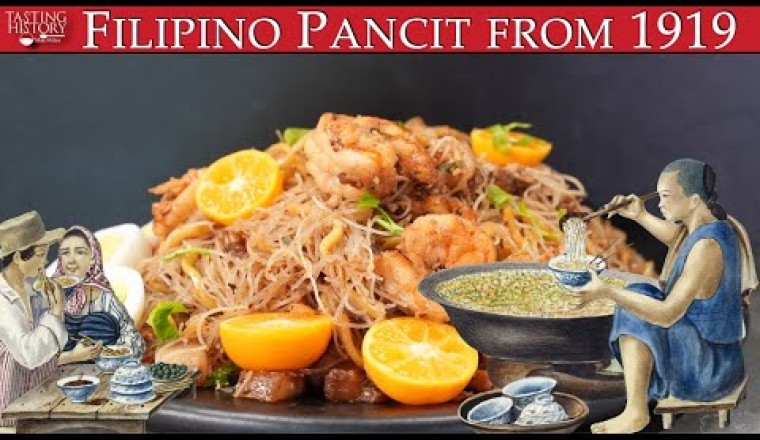

Pancit, also spelled pansít, is a general term referring to various traditional noodle dishes in Filipino cuisine. There are numerous types of pancit, often named based on the noodles used, method of cooking, place of origin or the ingredients.
INGREDIENTS
- 25 small or 15 large shrimp, whole with shell
- 3/4 cup (175 ml) water
- 2 tablespoons lard or oil
- 4 1/2 oz (125 g) pork, I used pork belly
- 4 1/2 oz (125 g) firm tofu
- 1/2 onion, diced
- 1/2 head of garlic, minced
- 1 tablespoon chopped kinchay, celery leaf, or parsley
- 1 tablespoon patis or other fish sauce
- 4 1/2 oz (125 g) bihon or other dried thin rice noodles
- 4 1/2 oz (125 g) miki or other thick egg noodles, fresh is preferred
- 1 hard-boiled egg
- 6 calamansi or limes or some kind of sour citrus
DIRECTIONS
- Prepare the shrimp by twisting off the heads, then peeling off the shell and pulling off the tails. You can discard the heads, but we’ll need the shells and tails for this recipe. To devein the shrimp, make a shallow slice down the back of the shrimp, then pull out the dark vein (the digestive tract) and discard it. Place the cleaned shrimp in the refrigerator.
- To make the shrimp liquor, place the shrimp shells and tails in a saucepan with the water. Bring it to a simmer and simmer for about 10 minutes, mashing the shells down with a spoon or ladle every minute or so. After 10 minutes, strain the shells out and set the liquor aside.
- Chop the pork belly and tofu into about 1/2 inch (1 cm) cubes.
- Heat the lard or oil in a carajay, wok, or large pan over high heat. When the oil is hot, add the pork belly and stir while it cooks. It should start to get some color after a minute or two. After it has started to brown, add the tofu and cook until the tofu also browns.
- If you have a large wok that can fit the shrimp without overcrowding, go ahead and add it. If your wok is smaller like mine, then remove the pork belly and tofu, then cook the shrimp for a couple of minutes so that it also gets some color. Remove the shrimp and set aside.
- Add the onion and garlic to the wok. Stir as it cooks for a couple of minutes, again until they’re nice and brown.
- Turn the heat down to medium and add the shrimp, tofu, and pork belly back in, along with the kinchay. Give it all a stir to make sure nothing is sticking to the bottom, then add in the patis and give it a stir. Let this all cook for a few minutes while you prepare the noodles.
- Soak the bihon noodles in cold water for 4 minutes. If the miki noodles are also dried, soak them as well, but fresh miki is the preference here.
- Add the soaked bihon and the miki to the wok and stir it as it cooks. Since my wok was smaller, I had to add the noodles in batches, letting them cook down a little before I could add more. If you have a large wok, you can add them all in at once.
- After all the noodles are added, pour in the shrimp liquor, cover the wok with a lid, lower the heat, and let it simmer for about 10 minutes.
- Slice the hard-boiled egg and the calamansi. I cut both of them in half, but slice however you like.
- After the pancit has simmered for 10 minutes, dish it up, garnish it with the egg and calamansi, and serve it forth.