

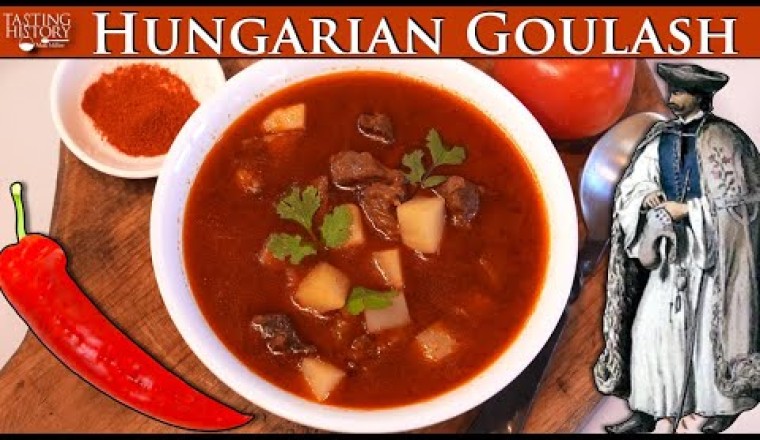

Rich, flavorful, and deeply comforting, Hungarian goulash is more than just a stew—it’s a national treasure. This iconic dish, with its tender beef, aromatic paprika, and slow-simmered broth, has been a staple of Hungarian cuisine for centuries.
Originating from the hearty meals prepared by Hungarian shepherds, goulash has evolved into a beloved dish enjoyed worldwide. Whether served with crusty bread, dumplings, or a side of potatoes, this soul-warming meal captures the essence of Hungarian culinary heritage. In this article, we’ll explore the history, ingredients, and cooking techniques that make Hungarian goulash a timeless classic.
You can read more about the timeline of development over on Tasting History.
INGREDIENTS
- 5 tablespoons (80 g) lard
- 1 3/4 cups (300 g) diced onion
- 4 teaspoons (20 g) sweet paprika, more to taste
- 2 1/4 lbs (1 kg) beef, preferably something high in collagen like shank, short ribs, oxtail, or chuck, cut into about 1 inch (2.5 cm) cubes, or smaller if you like
- 4 teaspoons salt
- 1/2 teaspoon caraway seeds
- 2 cloves garlic, minced
- 2 1/4 lb (1 kg) potatoes, I used russet
- 1 green bell pepper
- 1 small tomato
- 1 quart (1 L) beef stock, more or less as needed
- Csipetke (pinched pasta), optional
DIRECTIONS
- Place a large pot over medium high heat and melt the lard. Add the onions and stir to make sure they’re all coated in the fat. Reduce the heat to medium low and cook for about 30 minutes, or until they’re golden yellow and starting to brown, stirring occasionally so they don’t burn. You want to cook these low and slow to really develop the flavors.
- Take the pot off the heat and quickly stir in the paprika. It’s important to take it off the heat because the paprika can burn before it’s properly stirred in and will then turn bitter.
- Once the paprika is stirred in, you can put it back over the heat and stir in the meat and the salt. You can raise the heat a little bit if you’d like, then stir occasionally while the meat browns and starts to release its juices. Cook it until most of the liquid has cooked off and what remains in the pot has thickened, about 30 minutes.
- Stir in the caraway seeds and garlic. Add just enough cold water to go about halfway up the meat; you don’t want to cover the meat completely. Bring the pot to a simmer, then reduce the heat to low, cover the pot, and let it cook for at least 1 hour.
- While the goulash cooks, peel and chop the potatoes into about 1/2 inch (1 cm) cubes, then chop the bell pepper and tomato into small pieces.
- After 1 hour, or when the meat is nice and tender, add the chopped vegetables. Add just enough beef stock so that you can see it through the vegetables. Again, you don’t want to cover them completely. Turn the heat up to medium and bring it to a simmer, then reduce back to low, cover with the lid, and let it cook for about 45 minutes to 1 hour, or until the potato is fully cooked.
- Taste the goulash and add more salt or paprika as you like. Most modern recipes use much more paprika than this recipe, so add however much tastes good to you.
- If you’d like to add the csipetke, which is a type of small pasta shaped by pinching off pieces of dough, you can add it now and cook for another 5 minutes or so until the pasta is cooked. If you’re not adding the csipetke, simply add enough water or beef stock to get the soupy consistency that you like. Heat it through, then serve it forth.