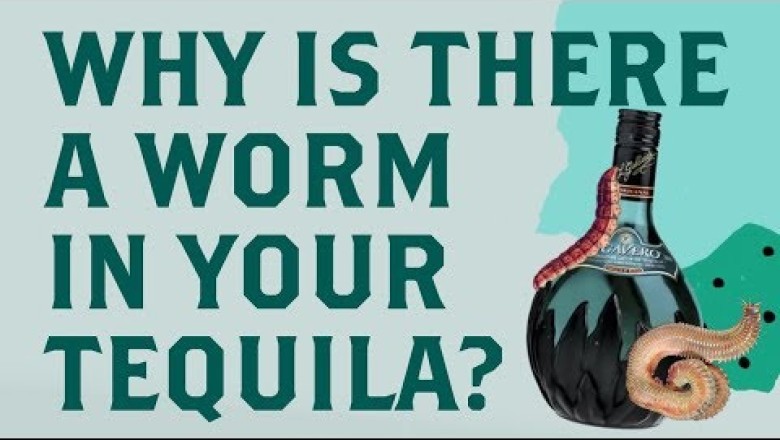

Some drinking legends refuse to crawl away. One of the most enduring is that tequila comes with a worm at the bottom of the bottle—and that swallowing it proves your courage or unlocks some mysterious power.
There really is a creature in some bottles of Mexican spirits. But the famous “tequila worm” has been getting credit under the wrong name for decades.
The Worm Belongs to Mezcal
The first surprise: authentic tequila does not contain a worm. The bottles people remember are certain varieties of mezcal, another Mexican spirit made from agave.
Tequila and mezcal share an agave heritage, which helps explain the confusion. But they have distinct production traditions, and adding a worm is associated with only some mezcal brands. Most mezcal is sold without one.
It Isn’t Actually a Worm
The little passenger is an insect larva, commonly called a gusano de maguey, or agave worm. In other words, it’s a caterpillar.
A study published in 2023 helped clarify exactly what was floating around in those bottles. Researchers examined larvae from commercially available mezcals and identified every specimen in their sample as the caterpillar of the agave redworm moth, Comadia redtenbacheri.
These caterpillars feed on agave plants, so their connection to the drink begins long before bottling. Still, the creature in the finished bottle is deliberately added—not an accidental survivor of distillation.
How Did the Tradition Begin?
Despite its old-world mystique, putting a worm in mezcal is a relatively modern practice, dating to the 1940s or 1950s.
Mexican entrepreneur Jacobo Lozano Páez is commonly credited with popularizing the idea. Accounts vary, but the familiar explanation is that adding a larva helped distinguish his mezcal from tequila and made the bottle memorable. Some versions also describe an interest in how the caterpillar affected the spirit’s flavor and color.
The precise details remain uncertain. What is clear is that this was a twentieth-century commercial novelty, rather than an ancient requirement for making mezcal.
And as marketing goes, it certainly had legs. Well, eventually it would have had wings.
What About the Legends?
Over time, the worm collected an impressive résumé. Stories claimed it demonstrated the drink’s purity, brought good luck, increased virility, or caused hallucinations.
Those claims belong to drinking folklore. The caterpillar has no established magical or hallucinogenic powers, and its presence is not a reliable measure of a mezcal’s quality.
The familiar dare to “eat the worm” helped turn a bottling novelty into a party ritual—and helped keep the mistaken tequila connection alive.
So, is the worm real? Absolutely. But the most famous thing about the “tequila worm” is how much its name gets wrong: it’s a caterpillar, it appears in some mezcals, and its greatest superpower has always been getting people talking.