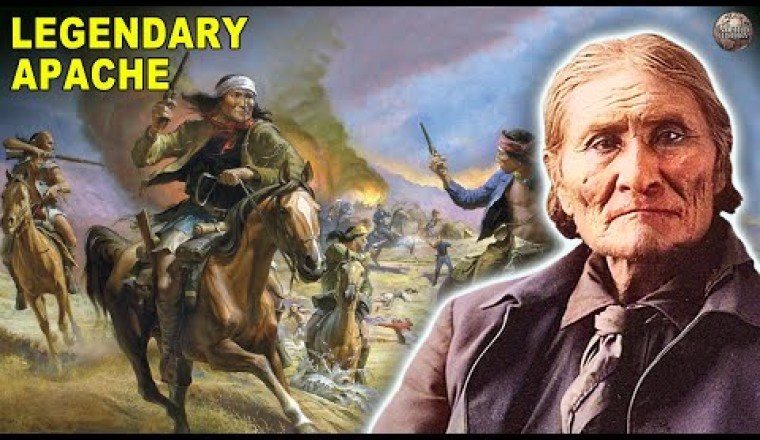

Geronimo (1829–1909), born Goyaałé—which means “The One Who Yawns”—was a legendary warrior and spiritual leader of the Chiricahua Apache, whose name still echoes through history as a symbol of fierce resistance and Indigenous pride. He was born in what is now southeastern Arizona, then part of Mexico, to the Bedonkohe band, one of several Apache groups.
As a young man, Geronimo lived a traditional Apache life—he hunted, married, and raised a family. But in 1858, everything changed. While he was trading in a nearby town, a group of Mexican soldiers attacked his camp, killing his mother, wife, and three young children. This devastating loss ignited a lifelong fire in his heart. He became a relentless warrior, seeking vengeance and justice. It was during this time that he earned the name Geronimo—possibly from Mexican soldiers invoking Saint Jerome (San Gerónimo) in fear as he charged into battle.
Although never officially a chief, Geronimo’s charisma, spiritual vision, and unmatched cunning in warfare earned him deep respect among the Apache. He became known not only for his tactical genius but also as a medicine man and prophet. He believed he was protected by supernatural powers that made him impervious to bullets, a belief that inspired fierce loyalty from his followers and unease in his enemies.
From the 1850s through the 1880s, Geronimo led a series of raids and resistance campaigns against both Mexican and American forces. These battles were not acts of wanton violence—they were acts of survival, of resistance against broken treaties, stolen lands, and forced relocation. He repeatedly escaped from reservations and launched guerrilla attacks from the mountains and deserts, using the rugged terrain to outwit vastly larger and better-equipped armies.
The U.S. military considered him a major threat. At one point, more than 5,000 troops were deployed to hunt him down—making it the largest deployment against a single Indigenous leader in U.S. history. After decades of defiance, Geronimo finally surrendered in 1886 to General Nelson A. Miles, along with a small band of followers, including women and children. His surrender marked the end of the Apache Wars.
Despite promises, Geronimo and his people were not allowed to return to their homeland. Instead, they were shipped off to prisons in Florida, Alabama, and later Fort Sill, Oklahoma, where he spent the rest of his life as a prisoner of war. While in captivity, he became a public figure—both romanticized and exploited by the American public. He sold autographs and crafts at fairs, appeared in Buffalo Bill’s Wild West Show, and even rode in President Theodore Roosevelt’s 1905 inaugural parade. Yet he was never granted the freedom to return home.
Geronimo died of pneumonia in 1909, still a prisoner, after falling from a horse and lying in the cold overnight. His final years were a complex mixture of fame, exploitation, and quiet dignity. He had asked to return to Arizona to be buried, but the government denied his request. He was buried at Fort Sill.
Today, Geronimo remains a complicated but towering figure—both feared and revered in his time. His legacy is a testament to the struggle of Indigenous peoples against colonization and cultural erasure. He is remembered not only as a warrior, but as a voice of resistance, a symbol of spiritual resilience, and a man who never stopped fighting for his people’s right to exist.
Quick Details
- Born: Jun 16, 1829 Arizpe Municipality, Mexico
- Died: Feb 17, 1909 Fort Sill, Lawton, OK
- Buried: Oklahoma