

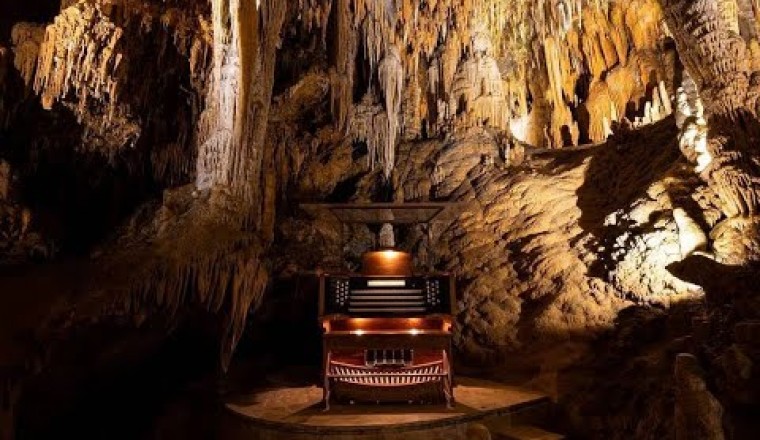

This is no poetic metaphor. This is the Great Stalacpipe Organ, an instrument literally carved by nature over millions of years and transformed by human ingenuity into something that sounds like the Earth herself is singing.
Built in 1956 by engineer and organist Leland W. Sprinkle, the Great Stalacpipe Organ uses the ancient mineral formations of Luray Caverns as its sound source. Sprinkle spent over three years painstakingly searching the caverns for stalactites that would ring out in perfect pitch when tapped. Once identified, these stalactites were fitted with rubber mallets connected to an organ console, creating a playable keyboard instrument that stretches across 3.5 acres—making it, by some measures, the largest instrument in the world.
When played, the cave resonates with pure, bell-like tones that ripple through stone corridors. The sound is otherworldly—ethereal, eerie, yet oddly soothing. It’s music that seems to rise not from air or strings, but from the bones of the planet itself.
This "cave organ" is not only an acoustic marvel, but a whimsical collision of natural history and human creativity. Its tonal palette is soft and haunting, like a lullaby whispered by stone. It's used for daily concerts and even, on occasion, weddings. Imagine saying "I do" while the Earth hums you a hymn.
So, while humans have fashioned flutes from mammoth bones and drums from hollow logs for tens of thousands of years, none compare in strangeness or scale to this lithophonic leviathan. It is the Earth's oldest voice, now playable—an instrument of geologic time and dreamlike sound. The Great Stalacpipe Organ reminds us that music isn’t just a human invention. Sometimes, the planet is already tuned and waiting.