

A Bold Leap into the Future of Music
In a move that’s as audacious as it is poetic, the Ottawa Symphony Orchestra (OSO) embarked on the 3D String Theory Project—a bold exploration of how modern technology can breathe new life into age-old melodies.
Scanning the Past, Printing the Future
-
Instrumentation began with a CT scan of a traditional violin, creating a digital blueprint that was transformed into a 3D model.
-
The initial prints were heavier than their wooden equivalents—some even twice the weight—but through iteration (seven rounds for some instruments!), engineers and musicians refined them into playable objects.
The Concert That Turned Heads
-
The debut unfolded in November 2018, in the resonant atrium of Ottawa City Hall—an opening flourish to OSO’s 2018–19 season under the direction of Maestro Alain Trudel.
-
The program featured a world premiere titled "Singularity" by composer Harry Stafylakis, scored for an octet wielding these ethereal instruments, backed by the traditional orchestra.
Sound: Something Unfamiliar Yet Full of Promise
-
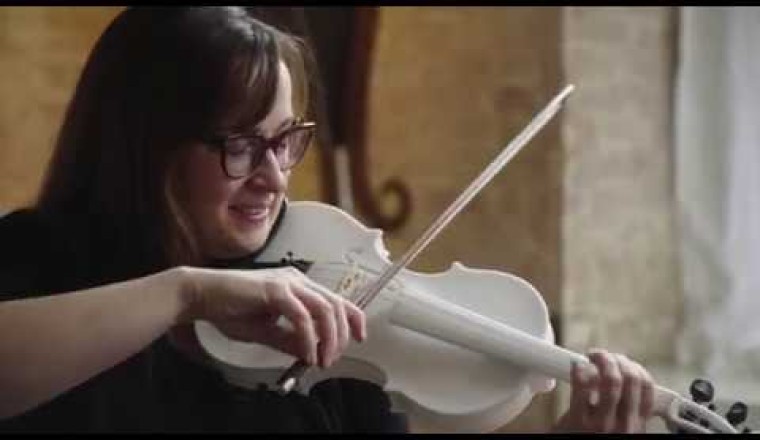
Violinist Mary-Elizabeth Brown tested the instruments and described their tonal character as “a different kind of soul,” rich in expressive color even if not a perfect match for her 18th-century Italian violin.
-
The instruments offered a mellower tone, sometimes “grittier under the ear,” louder at close range but with less far-field projection compared to wooden instruments.
-
“We always wondered… If we never try, we will never know,” reflected Maestro Trudel—embracing curiosity without expecting perfection.
Beyond Performance: Ergonomics, Innovation, Access
-
The project wasn’t just about novelty; it included a National 3D Printed Instrument Challenge, inviting designs that addressed physical strain among musicians. Finalists featured a clarinet/brace combo that redistributes weight and an electric violin with adaptive chin and shoulder supports.
-
Beyond elite performance, these instruments hold potential as affordable entry points for new musicians—a cheaper way to start the journey without sacrificing form or function.
A Tiny Muse with Huge Implications
What gives this endeavour its lyrical beauty is its refusal to settle—recognizing that technology doesn’t need to replicate tradition, but can complement and expand it. These plastic echoes of centuries-old craftsmanship hint at a future where:
-
Custom-built instruments match the exact size and needs of each musician.
-
Accessibility to the arts becomes broader, less burdened by cost or tradition.
-
Creativity meets pragmatism—melding string resonance, additive manufacturing, and the human touch.
Summary in a Nutshell
| Element | Highlight |
|---|---|
| Design & Creation | CT-scanned violin turned into 3D-printed prototypes, refined across iterations. |
| Instrument Lineup | Eight prints: 4 violins, 2 violas, 2 violoncello da spalla (viola-like cellos). |
| Debut Performance | Premiered in City Hall, Nov 2018, with "Singularity" by Stafylakis. |
| Sound Characteristics | Distinct tone—softer, grittier at close range, less projection. |
| Innovation | Ergonomic designs, accessible entry-point instruments, collaboration across disciplines. |
Part 1
Part 2
Part 3