
The Lycurgus Cup: Rome’s Magical Glass Masterpiece
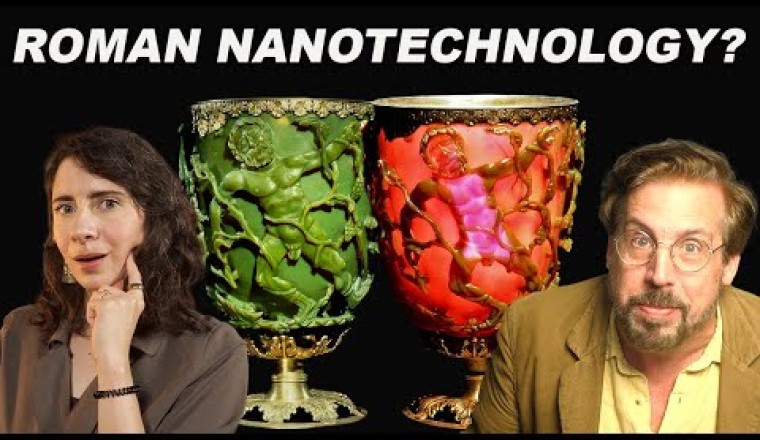
The Lycurgus Cup is one of the most dazzling and mysterious treasures of ancient Rome—a fourth-century glass cup that seems to perform a trick of sorcery. At first glance, the goblet glows a deep, rich jade green. But shine a light through it, and suddenly the color shifts to an eerie ruby red, as though the cup itself were alive and possessed of moods.
This isn’t magic, though the Romans surely thought of it as such. It’s science—nanoscience, to be precise. The Lycurgus Cup is the only known surviving example of dichroic glass from the ancient world. Its makers, through extraordinary skill and likely some accidental discovery, embedded tiny particles of gold and silver in the glass. These nanoparticles interact with light in a way that causes the glass to appear green in reflected light but red when illuminated from behind. In effect, Roman artisans stumbled onto principles of nanotechnology more than 1,600 years before modern scientists would even coin the term.
The cup itself is a cage cup, a type of luxury Roman vessel with intricate openwork design. It depicts the myth of King Lycurgus of Thrace, who tried to kill Ambrosia, a follower of the god Dionysus. In punishment, Dionysus ensnared him with vines until he went mad—a fittingly wild and dramatic tale to wrap around such a magical object.
The Lycurgus Cup wasn’t just decorative. Scholars believe it was used in banquets or ceremonies, where its color-changing properties would have astounded guests. Imagine a flickering oil lamp behind it, and suddenly the cup glows blood-red in the shadows—half wine, half fire. It must have seemed like a divine omen in glass.
Today, the Lycurgus Cup resides in the British Museum, a rare survivor from a time when art, science, myth, and mystery intertwined. Its creation remains a marvel: Roman craftsmen didn’t just make a beautiful cup; they created one of history’s earliest demonstrations of applied nanotechnology.
The cup reminds us that the ancient world, far from being primitive, was filled with flashes of genius that still dazzle and bewilder us today. The Lycurgus Cup is proof that art and science, when fused together, can achieve something that feels timeless—something that glows with the strange, shifting light of eternity.