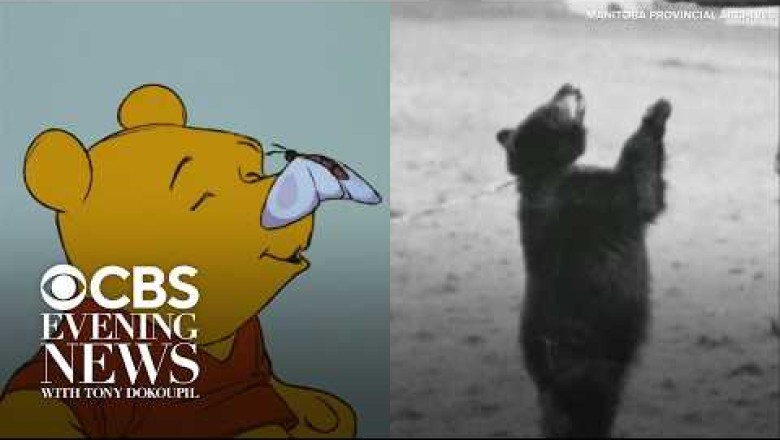

Before Winnie the Pooh wandered through the Hundred Acre Wood, a real bear traveled from Canada to England—and into literary history.
In 1914, Canadian army veterinarian Harry Colebourn bought an orphaned female black bear cub from a hunter in White River, Ontario, for $20. The hunter had killed her mother. Colebourn named the cub Winnie after Winnipeg, the Canadian city he called home.
As World War I carried soldiers overseas, some brought animal mascots to offer companionship and lift morale. Winnie accompanied Colebourn to England, becoming a beloved unofficial mascot for the Second Canadian Infantry Brigade during its training.
When Colebourn received orders to go to France, he needed somewhere safe for her to stay. On December 9, 1914, he placed Winnie in the care of London Zoo. He originally intended to bring her back to Canada, but eventually decided she should remain at the zoo, donating her permanently in 1919.
Among Winnie’s admirers was a little boy named Christopher Robin Milne. Captivated by the gentle bear, he renamed his own teddy bear—originally called Edward Bear—Winnie. The “Pooh” part of the name came from a swan.
Christopher’s father, author A. A. Milne, transformed his son’s stuffed animals and imaginative adventures into stories, accompanied by Ernest H. Shepard’s illustrations. Christopher Robin himself became a character, while his toys helped inspire familiar friends such as Piglet, Eeyore, and Tigger.
The first Winnie-the-Pooh book was published on October 14, 1926, making 2026 its 100th anniversary. The celebration honors a century of stories, although the real Winnie’s journey began more than a decade earlier.
As Tina Kraus explores in the accompanying CBS Evening News report, behind the honey-loving bear is a remarkable connection between a soldier, an orphaned cub, and a child’s imagination. A small act of kindness during wartime helped give the world an enduring symbol of friendship.