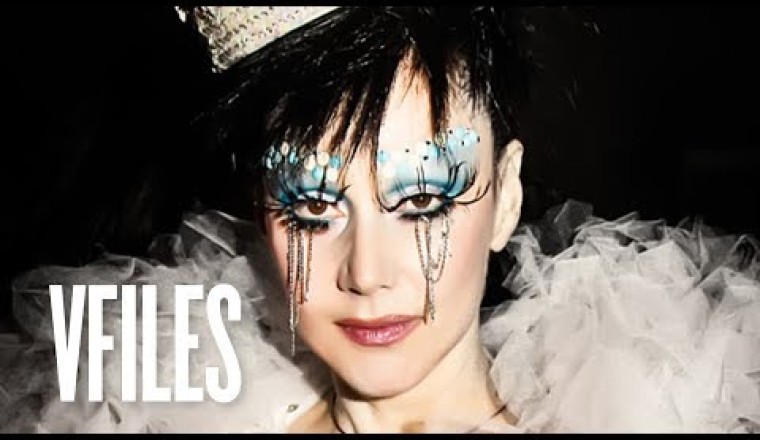

Born in Bern, Switzerland, and raised amid all the Alpine orderliness that implies, Susanne Bartsch left for London at 17, diving headfirst into the city’s underground New Romantic scene. By 1981, she had landed in New York, where her real work began — not just with fashion, but with spectacle, community, and cultural revolution.
Her first public endeavor was a boutique in SoHo that championed avant-garde British designers like Vivienne Westwood, John Galliano, and BodyMap. But retail was merely the runway — her true medium was people.
From Shopkeeper to Queen of the Night
In 1986, Bartsch began throwing parties under the Chelsea Hotel at Savage, where the crowd glittered with a mix of uptown elites, downtown punks, drag royalty, and DIY fashion rebels. Her events quickly became the pulsating heart of New York nightlife.
By the late ’80s, her Copacabana parties were the stuff of legend. Everyone showed up — fashion gods, queer icons, club kids, celebs — each night a living, breathing catwalk-meets-cabaret. The press dubbed her the "nightlife equivalent of a couture label." Her parties weren’t parties. They were curated explosions of creativity.
Activist Glam: The Love Ball & Beyond
When the AIDS crisis devastated her community, Bartsch didn’t sit still. In 1989, she launched the Love Ball, a lavish spectacle merging Harlem ball culture with fashion’s elite to raise money for AIDS charities. The first ball raised hundreds of thousands — and over the years, she helped raise millions.
This wasn’t philanthropy in pearls and silence. It was sequined protest, rhinestone resistance — activism through excess.
Legacy, Memoir & Museum Retrospective
In 2024, Bartsch released a lavish visual memoir, Bartschland: Tales of NYC Nightlife. Part coffee table art book, part time capsule, part fever dream — it captures her decades of glorious rebellion alongside collaborators like RuPaul, Amanda Lepore, and Zaldy.
Her contributions to fashion and queer culture have also been celebrated by major institutions. In 2015, the Museum at FIT honored her with a retrospective showcasing over 100 of her iconic looks. And in 2025, she returned to her homeland for a theatrical retrospective at Zurich’s Museum für Gestaltung. The show followed a six-act structure, reflecting everything from pre-party rituals to post-club serenity, all told through costume, installation, and vibe.
Why She Still Matters
Susanne Bartsch is not just a nightlife icon — she is an architect of self-expression. Her infamous “On Top” parties at Le Bain and other NYC venues still pulse with the same outrageous joy that marked her early days. The faces may change, but the energy never dulls.
She creates stages where everyone is invited to shine, shout, strut, and be seen. And that, darling, is revolutionary.
The Takeaway
Susanne Bartsch is a walking masterpiece. A human disco ball. A priestess of performance who built a world where fashion is freedom, queerness is power, and nightlife is sacred. Through feathers, latex, and light, she didn’t just throw parties — she created family, fostered healing, and taught us that the dance floor can be a place of divine transformation.
Long live the Queen of Nightlife.
Check out more Susanne Bartsch content.