
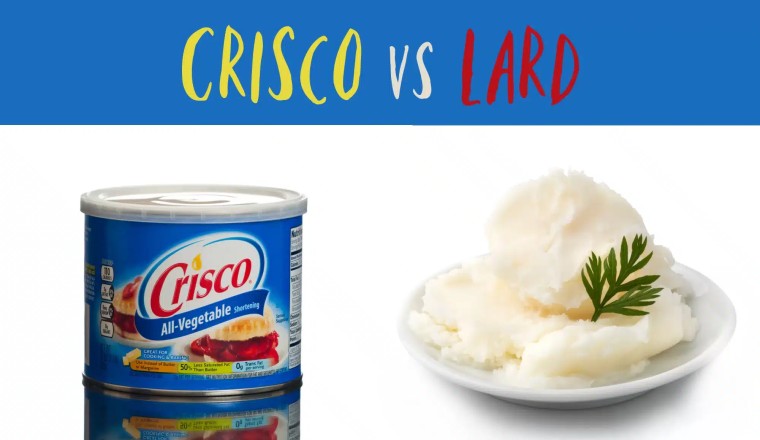

Lard and Crisco are both fats used in cooking and baking, but they differ in origin, composition, and some culinary properties.
Lard
- Source: Lard is a natural fat derived from the rendered fat of pigs. It's primarily sourced from the back and belly.
- Texture: Lard is soft, semi-solid at room temperature, and has a creamy texture.
- Flavor: It has a mild pork flavor, though refined lard is more neutral in taste.
- Uses: Traditionally used in baking (like pie crusts), frying, and cooking due to its richness and flavor. It gives a flakier texture to pastries.
- Nutritional Content: Lard contains both saturated and unsaturated fats. It's relatively high in monounsaturated fat (around 45%) and contains no trans fats.
- Smoke Point: 370°F (188°C), making it suitable for frying.
- Natural Product: Since lard is animal-based, it’s a natural product, often favored in traditional cooking.
Crisco
- Source: Crisco is a brand of vegetable shortening made from hydrogenated vegetable oils, such as soybean and palm oils.
- Texture: Crisco is solid at room temperature with a smooth, spreadable texture.
- Flavor: It is flavorless, making it neutral in taste for baked goods where no flavor is desired from the fat.
- Uses: Primarily used in baking, especially for flaky pastries, pie crusts, and as a substitute for butter or lard. It also works well for frying because of its high smoke point.
- Nutritional Content: Crisco used to contain trans fats due to the hydrogenation process, but now many varieties are trans-fat-free. It contains more saturated fat than oils but less than animal fats like lard.
- Smoke Point: Around 360°F to 370°F (182°C to 188°C), similar to lard.
- Vegetarian Option: Being plant-based, Crisco is a vegetarian and vegan-friendly alternative to lard.
Key Differences
- Flavor: Lard has a subtle pork flavor (especially unrefined versions), while Crisco is flavorless.
- Health Profile: Lard has more natural fats and some nutritional benefits like vitamin D, while Crisco, being processed, originally had trans fats (modern formulations often eliminate these).
- Culinary Use: Lard can add more flavor and richness, especially in savory dishes, whereas Crisco is used more for its neutrality in recipes.
In summary, both are great for baking and frying, but lard is a more natural and flavorful option, while Crisco is more neutral and plant-based.
Alton Explains the Virtues of Pork Fat (Lard)
What is Shortening?
Which Pie Crust is Best? Butter, Shortening, or Lard
What's the Best Lard on the Market?