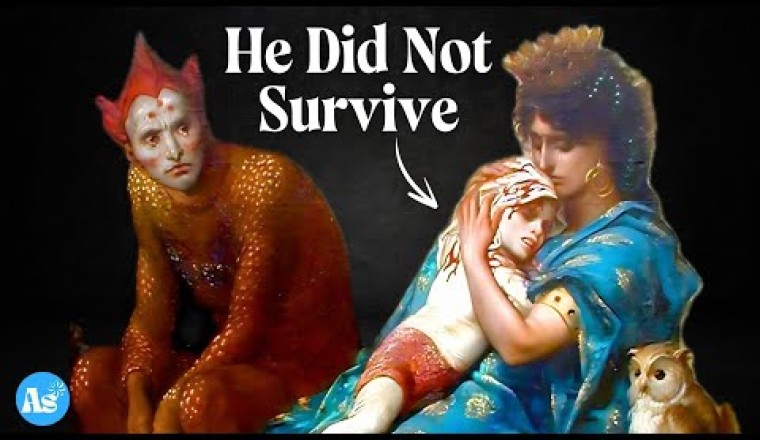

Gustave Doré, most famously known for his towering achievements in illustration, especially his iconic engravings for Dante’s Inferno and the Bible, was also a deeply emotive painter—and nowhere is this more evident than in The Acrobats (1874). In this poignant oil on canvas, Doré shifts his gaze from the epic to the intimate, presenting not mythology or scripture, but the quiet tragedy of a circus family. The work is a haunting, humanizing portrait of performers behind the curtain, where the glitter has faded and grief takes center stage.
The painting shows a sorrowful domestic moment: a father cradles the limp body of his young son, a child acrobat injured—or perhaps killed—in a performance accident. The mother, cloaked in anguish, weeps nearby. A small monkey, dressed in costume, huddles mournfully at their feet, an unsettling symbol of both innocence and exploitation. The setting is stark: a bleak, bare room, cold and threadbare, stripped of glamour. Only the child’s costume, bright and harlequin, remains as a trace of the life of spectacle they once led.
Doré, himself no stranger to loss—he lost his father young and endured a lifetime of emotional isolation—pours that grief into this composition. The chiaroscuro is masterful, reminiscent of Rembrandt, as Doré lets the light fall like a curtain across the faces, illuminating pain without overstatement. It is empathy on canvas. This isn't just a painting of circus folk. It's a requiem for the forgotten, the outcasts, and the dreamers who live on the margins of society, quite literally performing to survive.
Though largely ignored by critics during Doré’s life—many dismissed his paintings as melodramatic or overly sentimental—The Acrobats has earned renewed admiration in recent decades. Scholars now recognize it as a precursor to social realism and psychological portraiture, a stark shift from the romanticism that dominated the 19th century. Doré doesn’t beautify tragedy; he lets it sit, quiet and unblinking, before us.
Today, The Acrobats resonates more than ever, not just as a masterclass in mood and shadow, but as a testament to the unseen labor and unspoken suffering behind the curtain of performance. In a world still obsessed with the spectacle, Doré’s painting gently but powerfully reminds us: even acrobats can fall.