
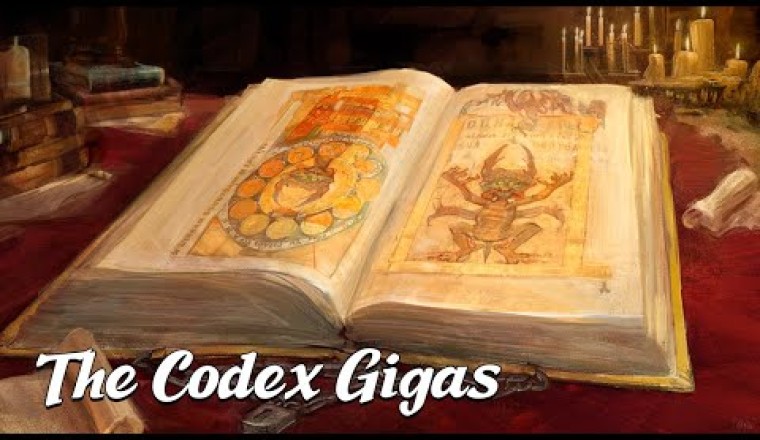

The Codex Gigas, also known as the "Devil's Bible," is one of the most famous and mysterious medieval manuscripts, renowned for its immense size and striking illustrations, particularly a full-page depiction of the devil. Here’s an overview of its history.
Creation and Origin (Early 13th Century)
The Codex Gigas was created in the early 13th century, likely around 1229, in the Benedictine monastery of Podlažice in what is now the Czech Republic (then part of the Kingdom of Bohemia). The identity of the scribe remains unknown, though some legends suggest it was created by a monk named Herman the Recluse.
- Dimensions: The book is massive, measuring 36 inches (92 cm) tall, 20 inches (50 cm) wide, and nearly 9 inches (22 cm) thick. It weighs around 165 pounds (74 kg), making it the largest known medieval manuscript.
- Materials: It was written on vellum, made from the skins of about 160 donkeys or calves, contributing to its colossal weight and durability.
Contents
Despite its infamous association with the devil, the Codex Gigas is actually a compendium of many different texts, religious and secular, including:
- The Bible (in the Latin Vulgate version, starting with the Old Testament).
- The Etymologies by Isidore of Seville (an encyclopedia of medieval knowledge).
- The Antiquities of the Jews and The Jewish War by Flavius Josephus (historical texts).
- Cosmas of Prague’s Chronicle of Bohemia (a historical record of Bohemia).
- Various medical texts and exorcisms.
- A complete calendar, along with a list of saints.
The Legend of its Creation
The most well-known legend surrounding the Codex Gigas is that it was created in a single night by a monk who made a pact with the devil. According to the story, the monk had violated the rules of his order and was sentenced to be walled up alive. In an attempt to avoid his grim fate, he promised to create a book that would glorify the monastery and contain all human knowledge—within one night. Realizing he couldn't complete such an immense task on his own, he supposedly prayed to Lucifer for help, and in return, Lucifer demanded the monk's soul.
To honor this alleged pact, the monk included a full-page portrait of the devil in the Codex, contributing to its eerie reputation as the "Devil’s Bible."
Later History
- Monastic Transfer: The Codex stayed in the monastery for a few centuries. However, by the end of the 16th century, the Benedictine monastery in Podlažice was dissolved, and the book was transferred to another monastery, Břevnov.
- Royal Ownership: In 1594, it was acquired by the Holy Roman Emperor Rudolph II, an avid collector of curiosities and occult artifacts, who kept it in his castle in Prague.
- Swedish Plunder: During the Thirty Years' War (1618–1648), Swedish forces captured the Codex Gigas when they sacked Prague in 1648. Since then, it has been housed in the Swedish Royal Library in Stockholm.
Notable Features
- The Devil Illustration: One of the most striking elements of the Codex is the full-page illustration of the devil, which stands alone on an entire page. This depiction of the devil is rare in medieval manuscripts, contributing to the aura of mystery and superstition around the book.
- Size and Consistency: Despite its size, the entire manuscript is written in one consistent hand, suggesting that it was likely written by a single scribe, although over many years rather than in one night as the legend suggests. The time and dedication required to create such a manuscript, particularly on vellum, was immense.
- Unfinished Sections: Certain sections of the manuscript appear unfinished, leading some scholars to believe that the work was interrupted or abandoned before its completion.
Modern Study
The Codex Gigas continues to fascinate historians, theologians, and cryptographers today. Its combination of religious texts, historical records, medical knowledge, and magical incantations make it a unique window into medieval scholarship and culture. The book has been scanned and digitized, allowing scholars and the public to explore it in detail.
Despite its dark reputation, it remains one of the greatest surviving examples of medieval manuscript craftsmanship. Its precise origin, the purpose behind its creation, and the reason for the devil's portrait remain matters of speculation, contributing to its enduring mystique.
If you'd like to check it out in full you can head on over to the Library of Congress.