
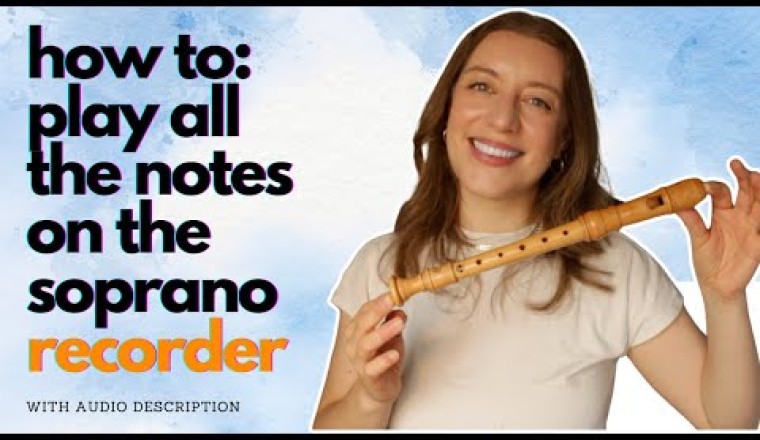

Its roots stretch back to the Middle Ages, but it blossomed into prominence during the Renaissance and Baroque periods. Crafted from wood and designed for agility, the soprano recorder became a favorite for both solo and ensemble music, celebrated for its clear, bright tone.
In the Baroque era (1600s–1700s), composers like Handel, Telemann, and Vivaldi wrote gorgeous, intricate pieces for the instrument. It was a staple in royal courts and chamber ensembles. However, as orchestras evolved and new instruments like the flute gained popularity, the recorder fell out of fashion by the late 18th century.
Fast forward to the 20th century: the soprano recorder was resurrected — this time in plastic — as a beloved educational tool. Its ease of use, affordability, and sweet timbre made it a classroom darling across the globe.
Today, the soprano recorder enjoys a dual life: a gateway to music-making for millions of beginners and a respected period instrument for historically informed performances.
TIMESTAMPS
00:14 the basics: how to hold the recorder and numbering the holes
First octave:
- 02:31 C
- 02:50 C#/Db
- 03:16 D
- 03:38 D#/Eb
- 04:05 E
- 04:30 F
- 05:05 F#
- 05:34 G
- 06:13 G#/Ab
- 06:47 A
- 07:09 Bb (both versions)
- 08:08 B
Second octave:
- 08:30 C
- 08:55 C#/Db
- 09:22 D
- 09:50 D#/Eb
- 10:38 E
- 11:00 F
- 11:27 F#
- 11:55 G
- 12:21 G#/Ab
- 12:54 A
- 13:17 Bb
- 13:48 B
- 14:16 C
14:50 Explaining hole 8
Extended range:
- 15:25 C#/Db
- 15:55 D
- 16:29 D#/Eb
- 16:47 E
- 17:07 F
- 17:28 F#
- 17:57 G
- 18:22 Low B
- 18:58 Low F
Fingering Chart
Legend
● = covered hole
○ = open hole
Half = half-covered (for tuning or specific accidentals)
T = thumb hole (back)
Hole numbers
T 1 2 3 4 5 6 7 (T is the back thumb hole)
Note Fingering Comments
C6 T ● ● ● ● ● ● ● Lowest note
D6 T ● ● ● ● ● ● ○
E6 T ● ● ● ● ● ○ ○
F6 T ● ● ● ● ○ ○ ○
G6 T ● ● ● ○ ○ ○ ○
A6 T ● ● ○ ○ ○ ○ ○
B6 T ● ○ ○ ○ ○ ○ ○
C7 T ○ ○ ○ ○ ○ ○ ○ Octave above lowest C
C♯7 T ○ ○ ○ ○ ○ ● ○ Use right pinky for stability
D7 T ● ● ○ ○ ● ● ○ Requires breath control
E7 T ● ● ● ● ○ ○ ○ Same as E6, but with more breath speed
Accidentals & Alternates (selected)
| C♯6 / D♭6 | T ● ● ● ● ● ○ ● |
| F♯6 / G♭6 | T ● ● ● ○ ● ● ○ |
| G♯6 / A♭6 | T ● ● ○ ● ● ● ○ |
| A♯6 / B♭6 | T ● ● ○ ○ ○ ● ○ |
| C♯7 / D♭7 | T ○ ○ ○ ○ ○ ● ○ |
📌 Tips for Baroque Fingering
- The thumb hole (T) is sometimes half-covered for higher register notes (especially C7 and beyond).
- Breath control is key! Baroque recorders can be sensitive — too much puff and you'll honk like a goose.
- Baroque vs. German: In Baroque fingering, F6 is played with hole 4 open and 5 covered. In German fingering, it’s the opposite — a common source of tragic recorder mixups!