
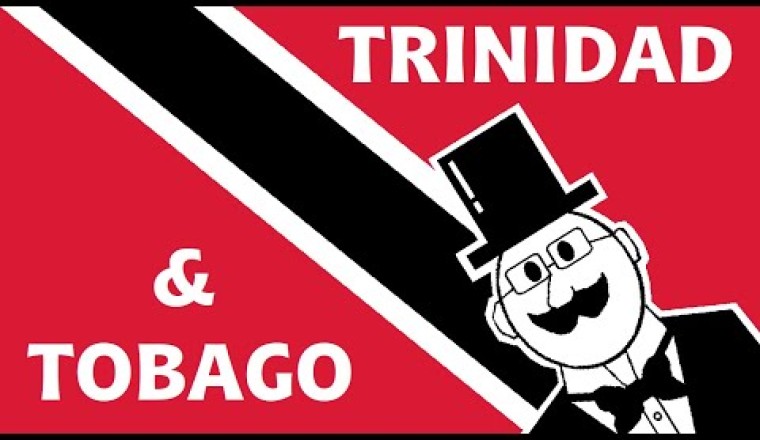

Yes, we’re talking about Trinidad and Tobago, the twin-island republic perched at the southern tip of the Caribbean. But have you ever paused to wonder: where did these islands get their names? And how did they become the cultural and historical kaleidoscope they are today?
Let’s time-travel together, shall we?
🏝️ Before the Colonizers Came: Iëre and Tavaco
Long before Columbus "discovered" anything, the islands were already home to thriving indigenous cultures. The Arawak and Carib peoples roamed these lands, sailing up from the South American mainland. They named the larger island Iëre, meaning “Land of the Hummingbird”—a name so poetic, it practically hums.
The smaller island may have been called Tavaco, inspired by the smoking pipes the indigenous peoples used. That’s right—Tobago might just be named after one of the earliest forms of smoking apparatus. Take that, Marlboro Man.
⛵ When Columbus Showed Up…
Fast-forward to 1498. On his third voyage to the New World, Christopher Columbus spotted three prominent hills as he neared the island. He named it La Isla de la Trinidad—The Island of the Trinity—in honor of the Christian Holy Trinity.
And just like that, Iëre became Trinidad. Cue centuries of colonization, conflict, and cultural fusion.
🔄 Colonial Hot Potato
Trinidad remained under Spanish rule for more than 300 years, though it wasn’t exactly the belle of the colonial ball. That changed in 1783, when the Spanish issued the Cedula of Population, inviting French settlers (and their enslaved laborers) to the island. This led to a cultural explosion—think French customs, African heritage, Spanish rule, and a dash of Caribbean fire.
Tobago, on the other hand, was the colonial world’s version of Tinder—swiped left and right by the Spanish, British, Dutch, French, and even the Duchy of Courland (today part of Latvia!). The British finally made it official in 1814.
In 1889, the two islands were joined under one administration—a bureaucratic marriage that, surprisingly, stuck.
🇹🇹 From Colony to Culture Capital
Trinidad and Tobago gained independence from Britain in 1962, becoming a republic in 1976. But the spirit of the islands? That’s always been independent. This is the birthplace of calypso, soca, and the steelpan, not to mention the world-famous Carnival that brings masqueraders, musicians, and mad creativity to the streets each year.
And let’s not forget the country’s role as a major energy producer in the region—Trinidad and Tobago isn’t just glitter and rhythm; it’s grit and strategy too.
📜 What’s in a Name?
So there you have it. “Trinidad and Tobago” is more than just a name. It’s a story wrapped in spirituality, colonization, resilience, and reinvention. It’s a symphony of hummingbirds and hurricanes, sacred mountains and smoky legends.
And it’s still unfolding, every single day.