

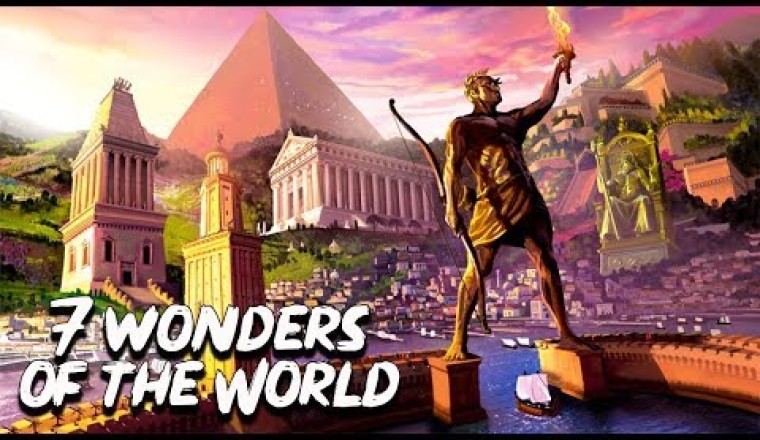

Dreamed up by Hellenistic travelers and scholars, this list was less of a guidebook and more of a love letter to the marvels of the known world. Here's a lyrical look at each of these fabled wonders:
1. The Great Pyramid of Giza (Egypt)
The lone survivor of the seven, the Great Pyramid was built around 2560 BCE as a tomb for Pharaoh Khufu. Towering at nearly 147 meters (before erosion and tomb raiders did their thing), it was the tallest man-made structure for over 3,800 years. And somehow, with just copper tools and muscle power, ancient Egyptians created a monument that has outlived empires.
2. The Hanging Gardens of Babylon (Iraq)
Did they really exist? That's still debated, but the legend is irresistible: lush terraces of exotic flora cascading from the skies of Babylon, supposedly built by King Nebuchadnezzar II for his homesick queen. Imagine a vertical paradise in the middle of a desert—where every leaf whispered romance and imperial grandeur.
3. The Statue of Zeus at Olympia (Greece)
Crafted by the famed sculptor Phidias around 435 BCE, this gold and ivory colossus sat regally inside the Temple of Zeus. At 12 meters high, Zeus filled the room from floor to ceiling, thunderbolt in hand, reminding worshippers who really ran the show in Mount Olympus and beyond.
4. The Temple of Artemis at Ephesus (Turkey)
An architectural marvel built (and rebuilt) three times, the final version stood as a luminous temple to the goddess Artemis. Completed around 550 BCE, it was supported by over 100 Ionic columns and gleamed with sculptures, bronze, and religious devotion. Sadly, a fame-hungry arsonist and later, invaders, brought it to ruin.
5. The Mausoleum at Halicarnassus (Turkey)
This majestic tomb was built around 350 BCE for Mausolus, a Persian satrap, by his grieving (and architecturally ambitious) wife Artemisia. It stood 45 meters tall and was so spectacular that Mausolus’s name became synonymous with extravagant tombs: mausoleum.
6. The Colossus of Rhodes (Greece)
A 33-meter-tall bronze statue of the sun god Helios, the Colossus was erected around 280 BCE to celebrate a military victory. Though it stood for just 54 years before an earthquake toppled it, its legend lives on. It didn’t straddle the harbor (sorry, Hollywood), but it did cast a mighty shadow on the ancient imagination.
7. The Lighthouse of Alexandria (Egypt)
Also known as the Pharos of Alexandria, this beacon of brilliance guided ships safely into port from as far as 50 kilometers away. Built in the 3rd century BCE on the island of Pharos, it was among the tallest structures of the ancient world. Earthquakes finally claimed it, but its image burns brightly in every lighthouse that followed.
Legacy Beyond Ruins
Most of these wonders are now dust, myths, or buried memories. But their legacy lives in our architecture, our storytelling, and our relentless desire to build, create, and awe. The ancients didn't just leave us ruins—they left us inspiration, daring us to dream bigger, reach higher, and carve our visions into stone.
Because even when time knocks a wonder down, humanity just builds another.
History Channel Documentary