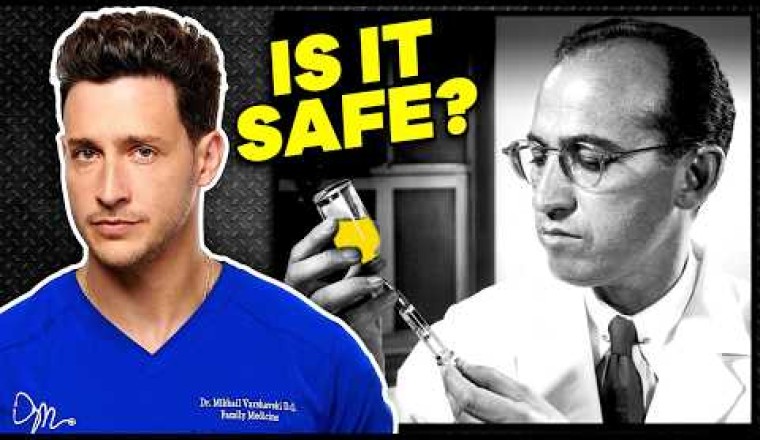

The history of the polio vaccine includes remarkable achievements but also controversial and troubling events. Here's an overview of some key points that highlight the complexity of this topic.
1. The Cutter Incident (1955)
- After the approval of Jonas Salk’s inactivated polio vaccine (IPV) in 1955, batches produced by Cutter Laboratories inadvertently contained live poliovirus instead of the inactivated form.
- This led to over 40,000 cases of polio, 200 children developing paralysis, and 10 deaths. The incident raised concerns about vaccine safety and manufacturing oversight.
- In response, regulations for vaccine production and safety testing were significantly tightened in the U.S.
2. Ethical Issues in Testing
- Before the vaccine was widely available, large-scale trials involved nearly 2 million children (the "Polio Pioneers") in the United States. While these trials are now seen as groundbreaking, ethical concerns were raised about informed consent and potential risks.
- In Africa and other developing regions, earlier polio experiments were conducted in ways that have been criticized for lacking transparency and exploiting vulnerable populations.
3. Simian Virus 40 (SV40) Contamination
- Between 1955 and 1963, some polio vaccines were found to be contaminated with Simian Virus 40 (SV40), a monkey virus present in the kidney cells used to produce the vaccine.
- While SV40 has been linked to cancer in animal studies, subsequent research has not conclusively shown that the contamination caused harm in humans. Nevertheless, this episode fueled public distrust in vaccines.
4. Racial and Geopolitical Contexts
- The development and distribution of the polio vaccine have been criticized for disparities in access and exploitation. Trials and vaccination campaigns in colonized or poorer regions have sometimes involved practices that disregarded local populations' autonomy or consent.
- These campaigns have left lasting scars in some communities and contributed to vaccine hesitancy in certain regions.
5. Modern Controversies
- In rare cases, the oral polio vaccine (OPV), which uses a weakened live virus, has been associated with vaccine-derived poliovirus outbreaks, particularly in areas with low immunization rates.
- This has complicated eradication efforts, as the vaccine itself can occasionally reintroduce the virus it seeks to eliminate.
A Dual Legacy
While the polio vaccine represents one of the greatest public health successes, eradicating polio in most of the world, these historical events serve as reminders of the ethical, scientific, and social challenges in medical innovation. They also underscore the importance of rigorous oversight, transparency, and ethical conduct in public health efforts.
Would you like more detail on any specific aspect of this history?