
Main Countries in Oceania (by subregion)
Australasia
- Australia
- New Zealand
Melanesia
- Fiji
- Papua New Guinea
- Solomon Islands
- Vanuatu
Micronesia
- Federated States of Micronesia
- Kiribati (partly in Micronesia and Polynesia)
- Marshall Islands
- Nauru
- Palau
Polynesia
- Samoa
- Tonga
- Tuvalu
- Kiribati (as noted, straddles both Micronesia and Polynesia)
Territories & Dependencies (often included in Oceania’s cultural and geographic definition)
These aren't independent countries, but they’re key players in Oceania’s story:
- American Samoa (USA)
- French Polynesia (France)
- Guam (USA)
- New Caledonia (France)
- Cook Islands (Self-governing, in free association with New Zealand)
- Niue (Self-governing, in free association with New Zealand)
- Tokelau (New Zealand territory)
- Pitcairn Islands (UK)
- Northern Mariana Islands (USA)
- Wallis and Futuna (France)
So, in total, there are 14 fully recognized sovereign countries, with numerous territories and dependencies dancing in their orbit. Some of them are tiny enough to disappear on a world map, but culturally and ecologically? They are giants.
Oceania: A World of Islands, Culture, and Wonder
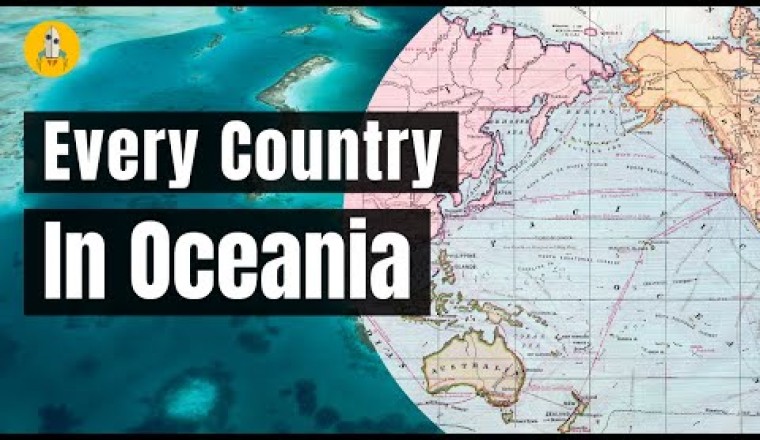
Oceania isn’t a continent in the traditional sense—it’s a sprawling, dreamlike patchwork of over 10,000 islands scattered across the boundless blue of the Pacific Ocean. It’s a region that whispers tales of ancient voyagers, vibrant traditions, and untamed beauty. Geographically, it includes four major subregions: Australasia (home to Australia and New Zealand), Melanesia, Micronesia, and Polynesia.
Australia may steal the spotlight with its sunburnt outback and cosmopolitan cities, but it’s only one piece of Oceania’s dazzling puzzle. Think of Fiji’s lush rainforests, the mystical moai statues of Easter Island, Papua New Guinea’s tribal heartlands, and the shimmering atolls of Kiribati and the Marshall Islands—each with its own heartbeat, languages, and legends.
The cultures here are as diverse as the landscapes. Indigenous traditions—like the Māori haka, the Samoan tatau (tattooing), or the ancient navigation techniques of Micronesian seafarers—still pulse through daily life. And while many islands are vulnerable to climate change, the spirit of resilience and connection to the land and sea remains fierce.
Oceania may be remote, but it’s far from isolated. It’s a living, breathing museum of human heritage, ecological marvels, and untamed beauty—proof that paradise isn’t just a postcard, but a place where people still dance under the stars and sail by starlight.