

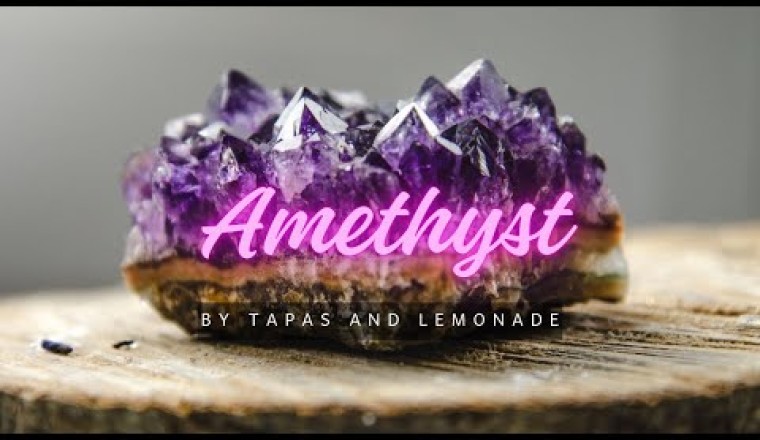

Amethyst is a purple variety of quartz that has been valued for its beauty and metaphysical properties for thousands of years. Here's an overview of its history and properties.
History of Amethyst
Ancient Civilizations:
- The name "amethyst" derives from the Greek word amethystos, meaning "not intoxicated." Ancient Greeks and Romans believed the stone could protect them from drunkenness, often wearing amethyst or drinking from amethyst goblets during feasts.
- In ancient Egypt, amethyst was used in jewelry and amulets and was thought to offer protection against harm and evil.
Medieval and Renaissance Eras:
- Amethyst was regarded as a symbol of royalty due to its rich purple hue and was used in the regalia of European monarchs.
- The clergy in the Catholic Church often wore amethyst as a symbol of purity and piety.
Modern Times:
- Amethyst remains a popular gemstone used in jewelry and decorative pieces. It's also highly valued in spiritual and metaphysical practices.
Physical and Geological Properties
Composition:
- Amethyst is a variety of quartz (silicon dioxide, SiO₂) with its color arising from trace amounts of iron and natural radiation within the crystal structure.
Color:
- Ranges from pale lilac to deep purple, sometimes with red or blue secondary hues. The intensity of the color often depends on the source and heat treatment.
Hardness:
- 7 on the Mohs scale, making it durable and suitable for various types of jewelry.
Crystal System:
- Hexagonal.
Locations:
- Found worldwide, but notable sources include Brazil, Uruguay, Siberia, Sri Lanka, Madagascar, and the United States.
Metaphysical and Healing Properties
Spirituality:
- Often associated with the crown chakra, amethyst is thought to promote spiritual awareness, enhance intuition, and foster a connection to the divine.
Calming and Balancing:
- Believed to have a calming energy, helping to relieve stress, anxiety, and promote restful sleep.
Protection:
- Historically, it has been considered a protective stone, guarding against negative energies and psychic attacks.
Sobriety:
- Continuing its ancient Greek association, it is thought to aid in overcoming addictions and maintaining clarity.
Uses
Jewelry:
- Popular in rings, necklaces, earrings, and bracelets due to its vibrant color and relative affordability.
Decorative Items:
- Carvings, geodes, and clusters are often used for home décor and energy work.
Meditation and Healing:
- Used in meditation practices to enhance focus and spiritual growth. Frequently included in crystal grids and energy healing rituals.
Amethyst's blend of physical beauty and deep historical significance has ensured its enduring appeal across cultures and eras.
If using your Amethyst for its metaphysical properties you should cleanse your new stone first. Then on a monthly basis or even before using the stone in certain activities you would re-charge the stone. There are many ways this can be done. See here