

Tag: 1800s

Marie Curie: Pioneer of Radioactivity and First Woman to Win a Nobel Prize
Discover the life of Marie Curie, the groundbreaking scientist who discovered polonium and radium, coined the term radioactivity, and became the first person to win two Nobel Prizes.

Florence Nightingale: The Lady with the Lamp Who Revolutionized Nursing
Discover the life of Florence Nightingale, the pioneering nurse and reformer who transformed modern healthcare, reduced wartime mortality, and founded the first professional nursing school.

Discovering The Origins of Art Nouveau Architecture
A deep dive into Horta's Architectural legacy and the beginnings of art nouveau with Paul Greenhalgh. Seen as a major breakthrough of modern architecture in the 1890s. Tracing its origins to Victor Horta’s house for the scientist and professor Émile Tasse...

Grief Behind the Curtain: Doré’s Heartbreaking Les Saltimbanques (1874)
Gustave Doré’s Les Saltimbanques (The Acrobats) reveals the tragic aftermath of a circus act, capturing raw grief, lost innocence, and the quiet sorrow behind the spectacle.

Charles-Valentin Alkan: The Virtuoso Who Vanished in Plain Sight
Charles-Valentin Alkan, a reclusive piano genius of the Romantic era, left behind dazzling, complex works now rediscovered by brave virtuosos of the modern age.

Explaining the Most Bizarre Piano Etude of the 19th Century
Charles-Valentin Alkan, a name that dances on the tongue like a half-remembered incantation, was one of the 19th century’s most enigmatic and virtuosic composer-pianists.

Dying To Get In: When Cemetery Picnics Were A Thing
Prior to the 19th century, graveyards were often a part of church grounds. Things like war and epidemics meant that soon there was not enough space to bury the dead there.

The Haunted Castle (1896 George Melies Silent Film)
Le Manoir du diable (English: The Haunted Castle) is a three-minute-long French film directed by Georges Méliès. The film contained many traditional pantomime elements and was intentionally meant to amuse people, rather than frighten them. Nonetheless, it...

Roundhay Garden Scene (1888)
The oldest surviving film is considered to be "Roundhay Garden Scene" (1888), recorded by French inventor Louis Le Prince. This short silent film, lasting only 2.5 seconds, depicts members of his family in a garden.

200-Year-Old Notes From Students Found in School Walls
While renovating a 200-year-old academy building, workers found a treasure trove of secret notes and doodles from students in the early 1800s.

How Does Morse Code Work?
Morse code is a telecommunications method which encodes text characters as standardized sequences of two different signal durations, called dots and dashes, or dits and dahs. Morse code is named after Samuel Morse, one of the early developers of the syste...

A Pet For the Princess - The Tragic Story of Peter The Wild Boy
Peter the Wild Boy was a famous "feral child" found in Germany in 1725. He was discovered living alone in the woods near Hamelin, apparently surviving without normal human contact. Peter couldn’t speak and walked on all fours, which fascinated and puzzled...
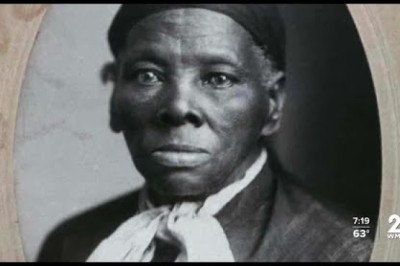
Piecing Together the Early Life of Harriet Tubman
“What we’re looking at today are artifacts from the home of Harriet Tubman’s birthplace.”

History of Macaroni and Cheese (1845)
Macaroni and cheese, a beloved comfort food today, has a long history that stretches back centuries. One of the earliest recorded recipes in English cookbooks appears in Modern Cookery for Private Families (1845) by Eliza Acton, a pioneering work that hel...
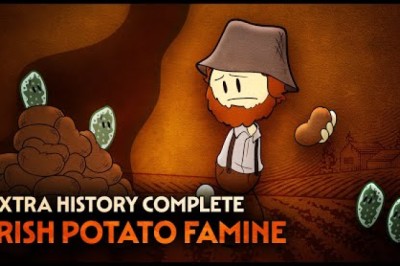
Irish Potato Famine
The 1845 potato blight struck Ireland after first hitting the United States, but the famine's devastating impact in Ireland was worsened by political and bureaucratic failures. British Prime Minister Robert Peel repealed the Corn Laws to lower food prices...


