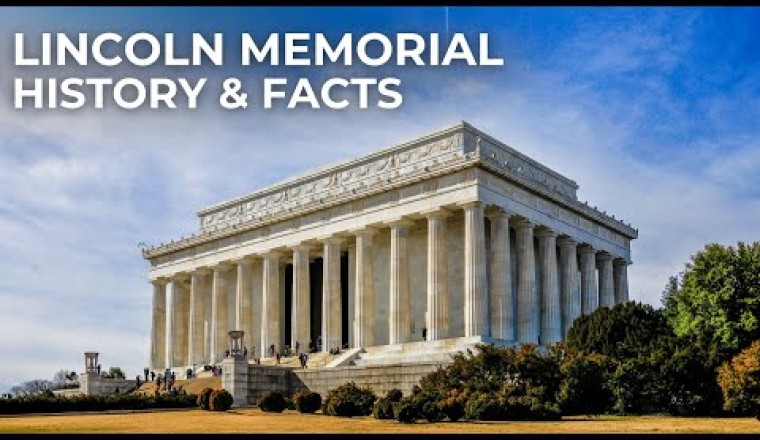

The Lincoln Memorial stands as one of the most iconic landmarks in Washington, D.C., a tribute not only to President Abraham Lincoln but also to the ideals of unity, equality, and democracy he championed. Its history is as layered and monumental as the structure itself.
The Idea Takes Shape
The first calls for a memorial to Lincoln began shortly after his assassination in 1865. Politicians and citizens alike wanted a permanent tribute to honor the 16th President of the United States. However, the idea languished for decades, delayed by political debates, funding issues, and differing visions of what form the memorial should take. Some proposals were modest statues, while others envisioned grandiose temples.
Design and Construction
Momentum for the project finally gained traction in the early 20th century. In 1910, Congress approved the creation of a Lincoln memorial, and construction began in 1914. Architect Henry Bacon designed the structure in the style of a Greek Doric temple, symbolizing the timeless principles of democracy. Inside, sculptor Daniel Chester French created a towering 19-foot statue of Lincoln, carved from Georgia marble by the Piccirilli Brothers.
The memorial’s walls feature inscriptions of two of Lincoln’s most famous speeches: the Gettysburg Address and his Second Inaugural Address. These words, paired with Jules Guerin’s powerful interior murals, reinforce Lincoln’s legacy as a unifier and moral leader.
Dedication in 1922
The Lincoln Memorial was officially dedicated on May 30, 1922, in a ceremony attended by President Warren G. Harding, former President William Howard Taft, and Lincoln’s own son, Robert Todd Lincoln. Notably, the dedication reflected the segregation of the era—Black and white attendees were seated separately, a sobering reminder that the fight for equality was far from complete.
A Stage for History
Since its dedication, the Lincoln Memorial has been more than a monument—it has been a stage for history. In 1939, Marian Anderson performed an open-air concert on its steps after being barred from Constitution Hall because of her race. In 1963, Dr. Martin Luther King Jr. delivered his unforgettable “I Have a Dream” speech there during the March on Washington, cementing the memorial as a symbol of civil rights and progress.
Lasting Legacy
Today, the Lincoln Memorial attracts millions of visitors each year. More than a stone tribute, it serves as a gathering place for reflection, protest, and national remembrance. It continues to stand as a powerful symbol of America’s struggle—and aspiration—for freedom and justice.
From its conception after the Civil War to its role in the Civil Rights Movement and beyond, the Lincoln Memorial tells a story not just of Abraham Lincoln, but of a nation still striving to live up to the ideals he defended with his life.
History And Facts About The Lincoln Memorial
Explore the Hidden History of the Lincoln Memorial in Washington DC
The Lincoln Memorial at 100 (2022)
The Lincoln Memorial's History (NBC News Flashback)
How the Lincoln Memorial became the back-drop of monumental moments
What's Under the Lincoln Memorial?