
Crafted typically from boxwood or grenadilla, the baroque flute has a conical bore and just one key (usually for E-flat), demanding skilled fingerwork and breath control. Its design was guided by aesthetics as much as function, favoring elegance and expressiveness over sheer power. The sound it produces isn’t about dazzling volume—it's about nuance, emotion, and the soul of the music.
Composers like J.S. Bach, Telemann, and Handel wrote extensively for the baroque flute, weaving it into the ornate tapestry of chamber works, solo sonatas, and orchestral suites. These compositions took advantage of its expressive range and its ability to blend seamlessly with strings and continuo.
By the end of the 18th century, innovations in flute design led to more keys and a brighter, louder sound better suited to concert halls. The traverso quietly stepped aside, its voice nearly lost to history. But today, in the early music revival movement, this hauntingly beautiful instrument has returned to the stage, played by musicians seeking authenticity and the quiet power of its baroque charm.
In the hands of a skilled player, the baroque flute doesn’t just perform—it converses, it sighs, it dances. It's a time machine in a tube of wood, singing the past into the present, one graceful phrase at a time.
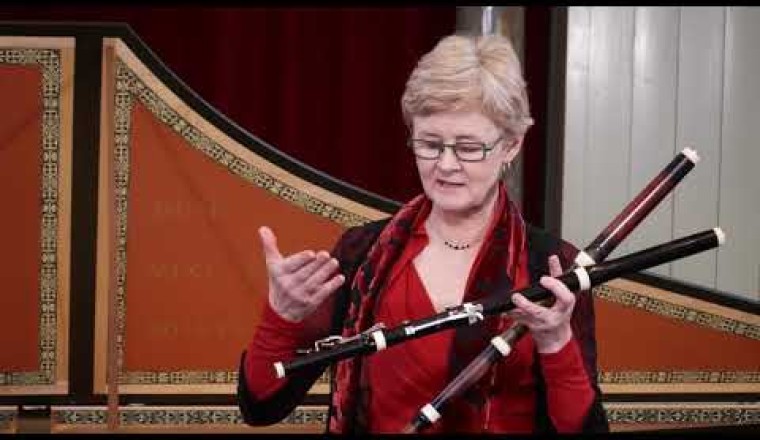
In this video, Kate talks about the flute that was used to play the music of Bach, Vivaldi, Handel, Telemann, and many others, as well as the similarities and differences to the earlier renaissance flute and the later classical and modern flutes.