
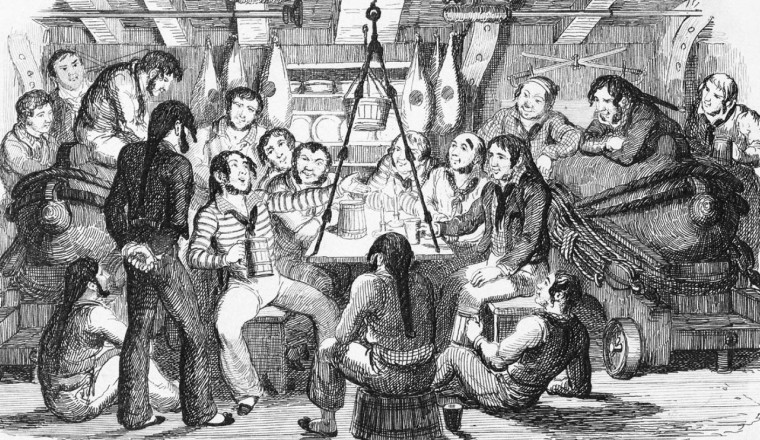

The origin of sea shanties can be traced back to maritime traditions and the needs of sailors during the Age of Sail, roughly from the 16th to the 19th centuries. Sea shanties evolved as work songs, designed to coordinate labor on ships and maintain rhythm during physically demanding tasks such as hauling ropes, raising sails, or pumping water. Their roots lie in a mix of cultural influences, including folk songs, work songs from various cultures, and even popular music of the time.
Key Aspects of the Origin
-
Functional Purpose:
- Sea shanties were primarily practical. They were sung to synchronize the efforts of sailors and make strenuous tasks easier.
- Different types of shanties were adapted to specific tasks:
- Halyard shanties for raising sails.
- Capstan shanties for winding the capstan.
- Short-drag shanties for quick, repetitive tasks.
-
Cultural Influences:
- The melodies and lyrics of shanties drew from a variety of sources, including African, Caribbean, European, and American folk traditions.
- Enslaved peoples, dockworkers, and sailors from diverse backgrounds contributed to the rhythms and call-and-response style typical of many shanties.
-
Historical Roots:
- Early precursors to sea shanties can be found in medieval and Renaissance work songs, as well as in the "chanty" traditions of African and Caribbean laborers.
- By the 18th century, the term "shanty" (or "chanty") began to emerge, likely derived from the French word chanter (to sing).
-
Oral Tradition:
- Sea shanties were transmitted orally, with sailors often improvising lyrics to reflect their experiences, the ship’s culture, or current events.
- This oral tradition helped preserve the genre’s adaptability and diversity.
-
Decline and Revival:
- The widespread use of steamships and mechanized labor in the late 19th century reduced the need for shanties.
- In the 20th century, folklorists, historians, and maritime enthusiasts revived interest in sea shanties as a form of cultural heritage.
Sea shanties remain a vivid reminder of life at sea, celebrated in contemporary folk music, maritime festivals, and even internet trends, as seen in the viral success of songs like "The Wellerman."