

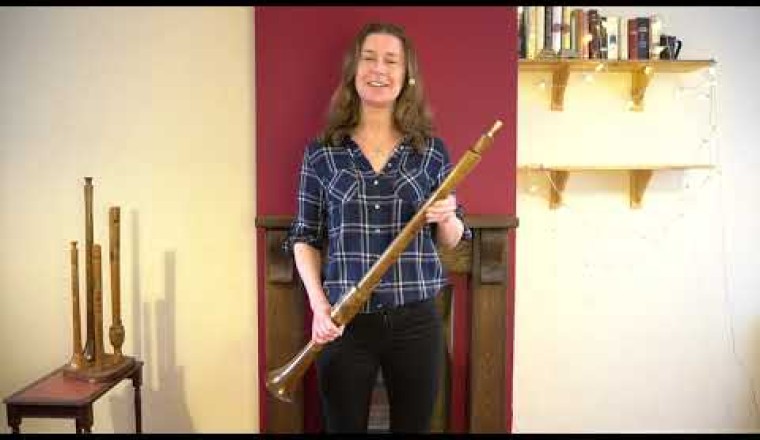

The shawm became especially popular in medieval and Renaissance Europe, where it was a prominent instrument in both court and military bands. It was known for its loud, piercing sound, which made it ideal for outdoor performances.
The European shawm likely developed from the zurna, a similar reed instrument found in the Middle East and Central Asia. By the 13th century, shawms had various shapes and sizes, allowing them to play in consorts, or groups, across different pitch ranges. Shawms were made of wood, typically with a flared bell and a double reed attached to a pirouette, a wooden disc that served as a support for the lips.
During the Renaissance, shawms were used in both secular and ceremonial music, providing festive and martial sounds for public events and courtly occasions. However, as music moved indoors and developed subtler styles, the shawm's robust sound became less popular. It gradually gave way to the more refined oboe by the Baroque period, which was designed to produce a softer tone suited for indoor performances.
Today, the shawm is still used in traditional and folk music in some parts of the world, particularly in North Africa, the Middle East, and Southeast Asia. In historical European music, it is often played by early music ensembles, which recreate the sound and style of medieval and Renaissance performances.