

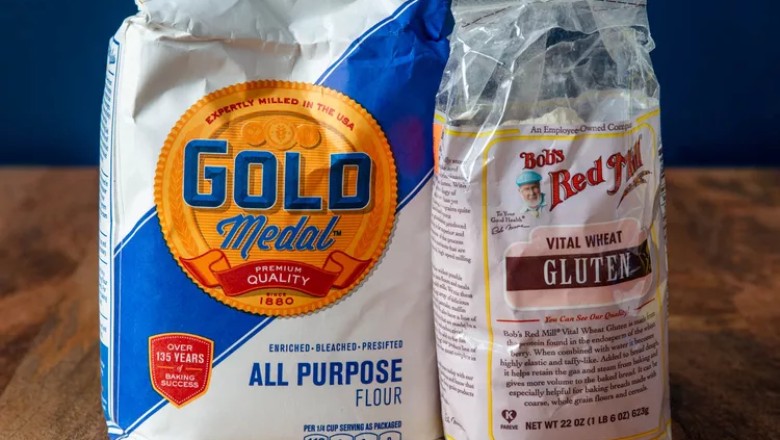

You’re ready to bake, but the recipe calls for bread flour and all you have is all-purpose flour. If you also have vital wheat gluten, you can mix up a useful substitute in minutes.
Bread flour generally contains more protein than all-purpose flour. As bread dough is mixed and kneaded, that protein helps form the gluten structure that gives a loaf its rise and chew. Protein levels vary by brand, so a homemade blend will approximate bread flour rather than match every bag exactly.
What You’ll Need
For each cup of substitute:
- 1 cup all-purpose flour
- 1½ teaspoons vital wheat gluten
How to Mix It
- Measure 1 cup of all-purpose flour into a bowl.
- Remove 1½ teaspoons of the flour and save it for another use.
- Add 1½ teaspoons of vital wheat gluten.
- Whisk or sift thoroughly to distribute the gluten.
Use the finished mixture in place of 1 cup of bread flour in a yeast bread recipe. Vital wheat gluten absorbs water, so check the dough as you mix it; if it feels unusually stiff, add a little water at a time until it reaches the consistency your recipe describes.
No vital wheat gluten? You can still try all-purpose flour on its own for many breads. The loaf may rise a little less or have a softer, tighter texture, but you needn’t put baking day on hold.
TIP
- Many standard recipes call for about 3 cups of bread flour. So the measurement would be:
- Measure 3 cups of all-purpose flour.
- Remove 4½ teaspoons of it. (That’s also 1 tablespoon plus 1½ teaspoons of vital wheat gluten, if that’s easier to measure.)
- Then add 4½ teaspoons of vital wheat gluten.
- Whisk well before adding it to your recipe.
How to Make Bread Flour in 2 Minutes