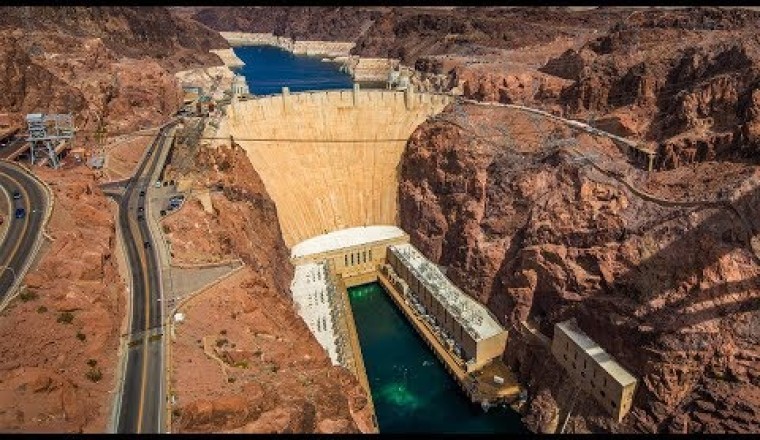

The Hoover Dam: A Monument of Modern Engineering
The Hoover Dam is one of America’s greatest engineering triumphs, a massive concrete arch-gravity dam that straddles the border of Nevada and Arizona. Built during the depths of the Great Depression, it remains both a functional power source and a symbol of human determination.
A Vision in Concrete
Construction began in 1931 and was completed in 1936, more than two years ahead of schedule. Rising 726 feet high and stretching 1,244 feet across the Black Canyon of the Colorado River, the Hoover Dam was at the time the tallest dam in the world. Its construction required over 3 million cubic yards of concrete—enough to pave a road from San Francisco to New York.
Taming the Colorado River
The Colorado River was once notorious for its unpredictable flooding, which threatened farmland and communities downstream. The dam created Lake Mead, the largest reservoir in the United States, which provides water to Arizona, California, Nevada, and even parts of Mexico. By harnessing the river, the dam not only provided critical irrigation and flood control but also ensured a steady water supply for millions of people.
Powering the Southwest
The Hoover Dam is also a hydroelectric powerhouse. Its 17 turbines generate electricity for Nevada, Arizona, and California, supplying energy to cities like Los Angeles and Las Vegas. Though other energy sources have since grown, the dam remains a vital contributor to the region’s power grid.
A Symbol of Resilience
The project employed thousands of workers during the Depression, offering both wages and pride at a time of widespread hardship. The dam has since been recognized as a National Historic Landmark and stands as a testament to American ingenuity, perseverance, and ambition.
Today’s Challenges
While the Hoover Dam continues to operate, it faces new challenges. Prolonged drought in the American West has lowered water levels in Lake Mead, reducing the dam’s power output. Climate change and shifting water demands have put its future role under scrutiny. Still, the Hoover Dam endures—both as an essential piece of infrastructure and as a striking reminder of what humans can accomplish when necessity and vision collide.
Building the Hoover Dam
America’s Most Powerful Dam - The Hoover Dam (Documentary)
Hoover Dam Tourist Guide