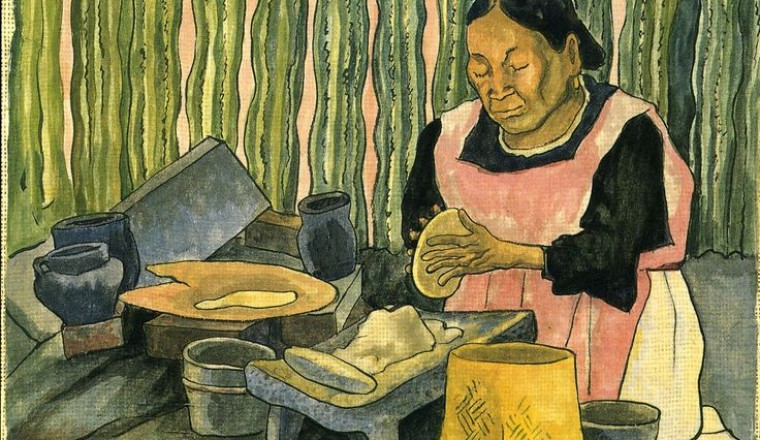

The history of tortillas, a staple in Mexican cuisine, is deeply tied to the ancient civilizations of Mesoamerica, particularly the Maya and Aztec cultures.
Here's an overview of their origin and evolution:
1. Origins in Mesoamerica
- Maize as a Staple Crop: Maize (corn) was domesticated around 9,000 years ago in what is now southern Mexico. It became a central food source for Mesoamerican societies.
- Nixtamalization: Around 1500 BCE, indigenous people developed the process of nixtamalization, soaking and cooking maize in an alkaline solution (limewater). This process made the maize more nutritious by releasing niacin and improving its texture, which allowed it to be ground into masa (dough).
- First Tortillas: The earliest tortillas, made from masa, date back over 3,500 years. Archaeological evidence suggests that they were thin, flat cakes cooked on clay comals (griddles).
2. Cultural Significance
- Aztec Diet: Tortillas were a primary food for the Aztecs, who called them tlaxcalli. They were used as a utensil, plate, and food item, often paired with beans, chili, and other simple fillings.
- Spiritual Importance: Maize was considered sacred, and tortillas were a representation of this divine connection. Maize and its products featured prominently in rituals and mythology.
3. Spanish Colonization and Adaptation
- Arrival of Wheat: When the Spanish arrived in the 16th century, they introduced wheat, which led to the creation of flour tortillas. These became more common in northern Mexico, where wheat thrived.
- Hybridization: While wheat tortillas gained popularity, maize tortillas remained dominant and symbolic of indigenous culture.
4. Evolution in Mexican Cuisine
- Regional Varieties: Over centuries, regional differences in tortilla production emerged. For example:
- Maize Tortillas: Made with various types of corn, including blue and white maize.
- Flour Tortillas: Common in the north, often larger and softer.
- Modern Uses: Tortillas became the base for numerous iconic dishes like tacos, enchiladas, tostadas, and quesadillas.
5. Global Popularity
- Industrialization: In the 20th century, the production of tortillas became industrialized with the invention of tortilla-making machines. This innovation made them more accessible worldwide.
- Cultural Spread: Today, tortillas are enjoyed globally, not only as part of Mexican cuisine but also as a versatile ingredient in various international dishes.
Symbol of Heritage
Tortillas are more than food; they represent a deep connection to the history, identity, and resilience of Mexican culture. From ancient comals to modern kitchens, they remain a beloved and enduring part of daily life.
How to Make CORN TORTILLAS
How to Make FLOUR TORTILLAS