


Cristofori was employed by the Medici family in Florence as a custodian of musical instruments, and his knowledge of harpsichord mechanics led him to experiment with ways to create a new instrument that could produce both soft and loud sounds, something that harpsichords and clavichords of the time could not do effectively.
Cristofori's breakthrough came in 1700 with his invention of the gravicembalo col piano e forte—literally, a "harpsichord with soft and loud," which became known as the pianoforte or simply piano. His new invention allowed musicians to control the volume of each note by changing how forcefully they struck the keys. This was made possible through a new hammer mechanism, which struck the strings and allowed for both soft (piano) and loud (forte) dynamics, depending on the player's touch.
Three of Cristofori’s original pianos survive today:
-
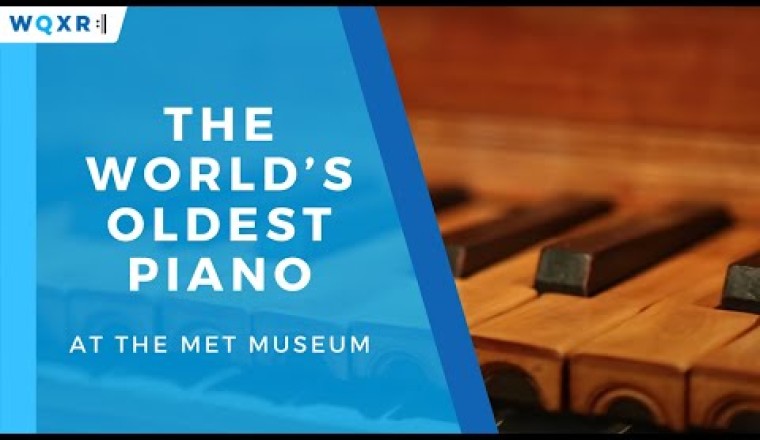
1720 Piano - Located at the Metropolitan Museum of Art in New York City, this is the oldest surviving piano and is believed to have been completed around 1720. It features an intricate escapement mechanism that allows the hammer to strike the string without remaining in contact, thus preventing dampening and allowing the string to vibrate freely.
-
1722 Piano - Kept at the Museo Nazionale degli Strumenti Musicali in Rome, this piano is nearly identical in structure and design to the 1720 instrument, showing Cristofori’s skill and consistency in craftsmanship.
-
1726 Piano - Housed in the Musikinstrumenten-Museum of Leipzig, this later instrument reflects refinements Cristofori made as he continued to develop his design.
Cristofori’s pianos were initially met with limited popularity, likely due to their high cost and the conservative tastes of musicians at the time. However, his invention laid the foundation for the modern piano, inspiring later instrument makers across Europe who made improvements that led to the instrument’s eventual dominance in classical and popular music by the late 18th century.
The surviving Cristofori pianos are treasured today as historical artifacts and mark a key turning point in the development of Western music, providing early examples of an instrument that would shape the sound of music for centuries.