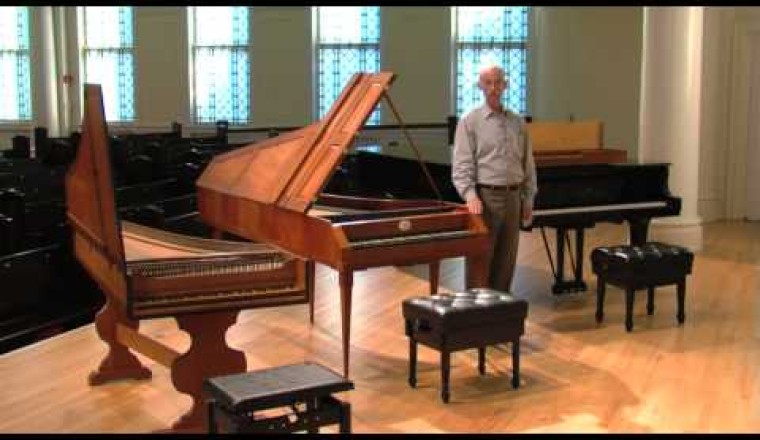

Here’s a brief overview:
-
Clavichord (14th Century): Originating in the late Medieval period, the clavichord was one of the earliest keyboard instruments. It produces sound by striking brass or iron strings with metal tangents attached to the keys. The clavichord’s sound is soft and intimate, making it suitable for small spaces but inadequate for larger audiences.
-
Harpsichord (16th Century): The harpsichord, popular during the Renaissance and Baroque periods, creates sound by plucking strings with a quill or plectrum as keys are pressed. It allowed for a brighter, more projecting sound compared to the clavichord, making it suitable for larger spaces. However, it lacked dynamic control (loudness or softness) since pressing the keys harder did not affect the volume.
-
Fortepiano (1700): Invented by Bartolomeo Cristofori in Italy around 1700, the "fortepiano" (meaning "loud-soft") was the first true piano. Unlike the harpsichord, it could vary dynamics based on how hard the keys were pressed, thanks to its hammer mechanism that struck the strings instead of plucking them. This innovation marked the beginning of the piano’s unique expressive range.
-
Early Pianos (18th-19th Centuries): Throughout the 18th and 19th centuries, the piano underwent numerous developments. Builders experimented with metal frames, additional pedals, and expanded keyboard ranges, enabling more powerful sound and greater durability. The Industrial Revolution brought advances in metallurgy and mass production, allowing for stronger strings, cast-iron frames, and standardized manufacturing.
-
Modern Grand and Upright Pianos (19th Century-Present): By the late 19th century, pianos evolved into the forms we recognize today. The grand piano, with its horizontal strings and open case, became favored for concert settings, while the more compact upright piano became popular in homes. Innovations continued, including the double-escapement action (for rapid note repetition) and refinements in stringing and hammer mechanisms, leading to the rich and versatile instrument that dominates classical and popular music today.
The journey from the clavichord to the modern piano reflects centuries of innovation aimed at expanding expressive range, dynamic control, and tonal power—qualities that have made the piano an enduring cornerstone of Western music.
Part 1
Part 2