

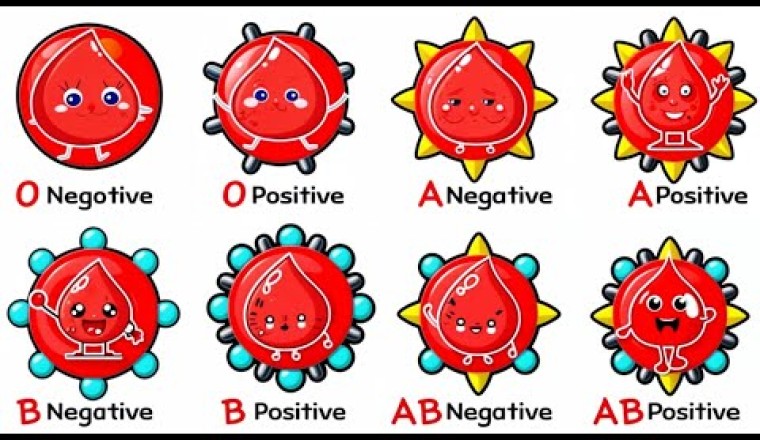

Blood type refers to the classification of blood based on the presence or absence of specific antigens on red blood cells.
The most commonly used blood typing system is the ABO system, which categorizes blood into four main types:
- Type A – Has A antigens on red blood cells and anti-B antibodies in the plasma.
- Type B – Has B antigens on red blood cells and anti-A antibodies in the plasma.
- Type AB – Has both A and B antigens but no A or B antibodies (universal recipient for blood transfusions).
- Type O – Has no A or B antigens but has both anti-A and anti-B antibodies (universal donor for blood transfusions).
Another important factor is the Rh factor (Rhesus factor):
- Rh-positive (Rh⁺) means the blood has the Rh antigen.
- Rh-negative (Rh⁻) means the blood lacks the Rh antigen.
Together, these create eight possible blood types: A+, A-, B+, B-, AB+, AB-, O+, and O-. Blood type is crucial for safe blood transfusions, organ transplants, and pregnancy compatibility.