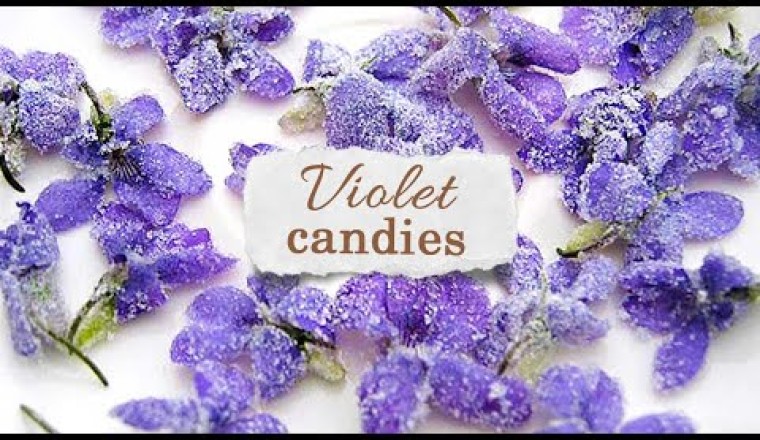

These sugared blossoms, often found gracing the tables of French aristocrats or nestled into decorative boxes, were made by coating fresh violet petals in egg white, then carefully dusting them with superfine sugar before allowing them to dry into crystallized elegance.
Highly prized for their subtle floral taste and captivating appearance, candied violets adorned pastries, garnished fine puddings, and sometimes even served as stand-alone confections. In France, particularly in Toulouse and Paris, they became a culinary fashion—gracing the sweets of haute cuisine and perfuming the air with their gentle scent.
More than a culinary fad, they were a small luxury, a marriage of nature and artifice, cherished both for their flavor and for the delicate hands it took to preserve their fragile beauty. Today, while still made in traditional confectioners’ shops in Europe, they serve as a wistful taste of an age when sugar and petals met in gilded harmony.
INGREDIENTS
- 4 dozen fresh violet flowers with stems
- 1 egg white or 1/4 cup aquafaba
- 1/2 cup superfine sugar (or purple sanding sugar)
DIRECTIONS
- Gently rinse and dry the violets first.
- Lightly beat the egg white or aquafaba with a fork in a small bowl until frothy for about 30 seconds.
- Working with one flower at a time, use a small paintbrush to paint a thin layer of the the egg white/aquafaba onto the front and back of each violet petal.
- Hold the flower over the bowl of sugar and sprinkle sugar by the spoonful over the petals to coat the flower head completely in sugar.
- Place the flower onto a sheet of parchment paper or waxed paper to dry and pinch of the stem. Repeat steps 2-4 for each flower.
- Let the candied flowers air dry for at least 24 hours in a warm dry spot or dehydrate them fully in a dehydrator.
- Place the dried flowers into an airtight container lined with a paper towel as a cushion to store them until you are ready to use them.