

Early Life
Born James Butler Hickok in Troy Grove, Illinois, he grew up in a large family and developed exceptional shooting skills. In his early 20s, Hickok moved westward, where he worked as a stagecoach driver and later as a scout for the Union Army during the Civil War.
Life as a Lawman and Gunfighter
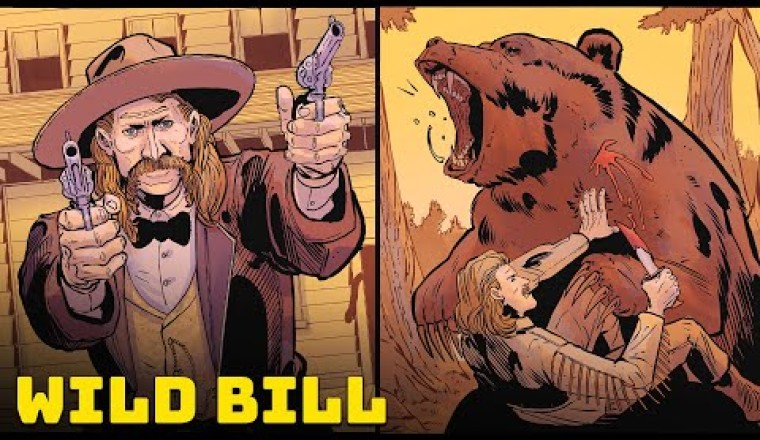
Hickok gained fame in the 1860s and 1870s for his roles as a lawman in towns like Hays and Abilene, Kansas. He became known for his quick draw and accuracy with a pistol, with numerous accounts of deadly gunfights attributed to him. Some of his exploits, such as the famous 1867 duel with David Tutt in Springfield, Missouri, were well-documented, further enhancing his reputation as a gunfighter.
Gambling and Later Life
Hickok was also a skilled gambler and spent much of his later life playing cards. In 1876, he moved to Deadwood, South Dakota, during the Black Hills Gold Rush. It was there that he was famously shot and killed while playing poker by Jack McCall, an event that added to his legend. At the time of his death, Hickok was holding a hand of two aces and two eights, known today as the "Dead Man's Hand."
Legacy
Wild Bill Hickok remains a symbol of the Wild West. While his life was often romanticized, historical accounts depict him as a complex figure—brave and skilled, but also flawed and vulnerable. His story has been retold in countless books, films, and television shows, preserving his legacy as one of the Old West's most iconic figures.