
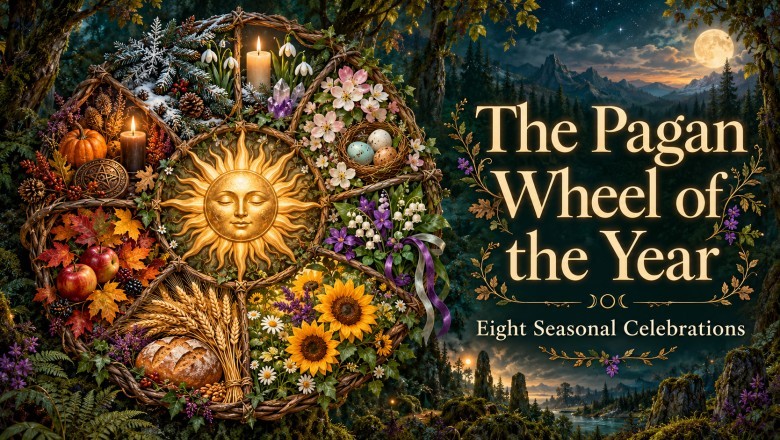

Nature has a rhythm: seeds awaken, flowers bloom, harvests ripen, and the earth settles into rest before beginning again. The Wheel of the Year gives spiritual meaning to that recurring journey through eight seasonal festivals known as sabbats. Observed by many Wiccans, witches, and other modern pagans, these celebrations offer opportunities to recognize change, express gratitude, honor loved ones, and reconnect with the natural world.
The wheel brings together the two solstices, two equinoxes, and four festivals that fall roughly between them. Although several celebrations have roots in older European traditions, the familiar eight-festival calendar took shape in the twentieth century. Pagan traditions are diverse, and not everyone follows the same calendar or celebrates in the same way.
The dates below follow Northern Hemisphere seasons. Solstice and equinox dates vary slightly by year and location. Many Southern Hemisphere practitioners shift the festivals by approximately six months to reflect their local seasons.
-
Samhain — October 31–November 1
Samhain marks the closing of the harvest season and the entrance into the darker half of the year. Often regarded as a spiritual new year in modern witchcraft, it invites reflection on endings, mortality, ancestry, and transformation. Many practitioners believe the boundary between the living and the spirit world becomes especially thin at this time. Celebrations may include displaying photographs of departed loved ones, sharing family stories, setting a place at the table in their memory, or practicing divination. Its mood can be solemn, affectionate, and deeply personal: a reminder that those we have loved continue to shape our lives.
-
Yule — Winter Solstice, Around December 21
Yule celebrates the winter solstice, the shortest day and longest night of the year. From this turning point, daylight gradually increases, making the festival a symbol of hope, renewal, and the returning sun. Candles, hearth fires, evergreens, and Yule logs help express the promise of life enduring through winter. Modern celebrations often include feasting, exchanging gifts, decorating with natural materials, and spending time with loved ones. Spiritually, Yule encourages patience with quiet seasons. Even when growth is difficult to see, the light has already begun its return.
-
Imbolc — February 1–2
Imbolc welcomes the earliest stirrings of spring while winter still holds much of the landscape. Rooted in Gaelic seasonal tradition, it is closely associated with Brigid, a goddess connected with poetry, healing, smithcraft, and the hearth. Contemporary observances often emphasize cleansing, inspiration, renewal, and preparation. Lighting candles, refreshing an altar, cleaning the home, or beginning a creative project can all express the festival’s themes. Imbolc is a celebration of potential: the seed beneath the soil, the idea waiting to take shape, and the small signs that change is on its way.
-
Ostara — Spring Equinox, Around March 20
Ostara celebrates the spring equinox, when daylight and darkness are approximately equal and the Northern Hemisphere moves toward longer days. In modern pagan practice, it represents balance, fertility, fresh beginnings, and the awakening of the earth. Eggs, rabbits, flowers, and sprouting seeds commonly appear as symbols of life and possibility. Practitioners may plant a garden, decorate eggs, take a mindful nature walk, or set intentions for the months ahead. The festival offers a useful question for personal reflection: What would you like to nurture now that the season of growth has arrived?
-
Beltane — April 30–May 1
Beltane welcomes the beginning of summer in traditional Gaelic seasonal reckoning and celebrates vitality, fertility, love, and protection. Historically associated with protective fires and the movement of livestock toward summer pasture, it has become a particularly joyful festival in modern pagan communities. Celebrations may include bonfires, flowers, ribbons, maypole dancing, music, and shared meals. Its fertility symbolism can encompass gardens, creative work, relationships, and the flourishing of a community. Beltane invites people to celebrate connection and take pleasure in being alive as the landscape fills with color and energy.
-
Litha — Summer Solstice, Around June 21
Litha, a name used by many modern pagans for the summer solstice, celebrates the longest day and shortest night of the year. The sun reaches its greatest seasonal prominence, making this a festival of strength, abundance, confidence, and joy. Outdoor gatherings, sunrise observances, flowers, bonfires, and seasonal meals are common ways to mark the occasion. Yet the celebration also contains a quiet turning point: after the solstice, daylight gradually begins to decrease. Litha encourages appreciation of life at its fullest while reminding us that even moments of brilliance belong to an ever-changing cycle.
-
Lughnasadh or Lammas — Around August 1
Lughnasadh celebrates the beginning of the harvest and takes its name from the Irish god Lugh, associated with skill and mastery. Lammas, often observed alongside it in modern pagan calendars, comes from an English Christian “loaf-mass” tradition connected with the first grain harvest. The names have distinct histories, although contemporary celebrations frequently share themes of bread, gratitude, work, and sustenance. Baking a loaf, sharing seasonal food, or honoring a craft are meaningful observances. This sabbat asks us to recognize both the nourishment we receive and the effort required to bring something from its first promise to fruition.
-
Mabon — Autumn Equinox, Around September 22–23
Mabon is the modern pagan name commonly given to the autumn equinox, another point when daylight and darkness are approximately balanced. Often celebrated as the second harvest festival, it emphasizes gratitude, generosity, reflection, and preparation for the quieter months ahead. Apples, squash, grains, fallen leaves, and harvest meals frequently feature in its observance. Practitioners may share food, donate to others, review personal accomplishments, or consider what they are ready to release. As the wheel turns toward Samhain once more, Mabon offers an opportunity to gather what sustains us and make room for rest.
What is the Pagan Wheel of the Year?