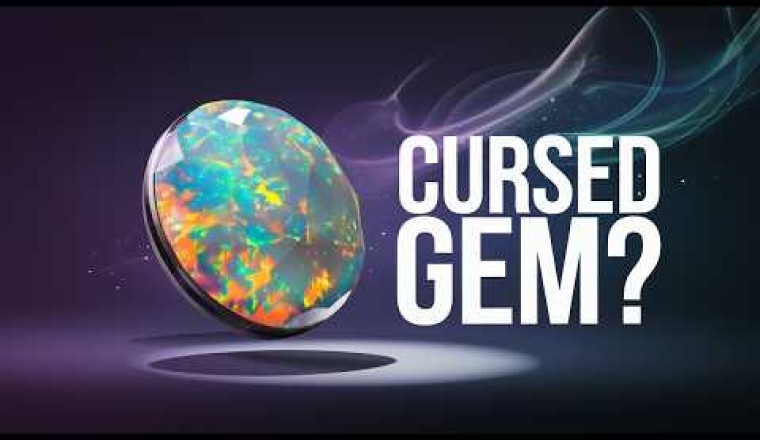

Once believed to hold the powers of every precious stone, the opal has been a symbol of hope, creativity, and passion across cultures and centuries. From ancient Roman treasures to the fiery deserts of Australia, the story of opal is as rich and dazzling as the gem itself. Today, opals continue to enchant jewelry lovers and collectors alike, prized for their beauty, rarity, and mysterious allure.
Origins and Early History:
- Ancient times: Opals have been prized for thousands of years. The earliest known opal artifacts date back to around 4000 BCE in Kenya.
- Ancient Rome: Romans loved opals and considered them a symbol of hope and purity. They called it opalus, meaning “precious stone.” They sourced many of their opals from what is now Slovakia.
- Ancient myths: In Arabic lore, it was believed opals fell from the sky during thunderstorms, trapping lightning inside. In Greek mythology, opals were said to be Zeus’s tears after his victory over the Titans.
Middle Ages:
- Opals were thought to bring good luck. People believed that opals had the powers of all colored stones because of their wide range of colors.
- Medieval Europeans thought opals could make the wearer invisible — it was associated with thieves and spies.
19th Century:
- Opals' reputation took a hit when Sir Walter Scott’s novel "Anne of Geierstein" (1829) described a magical opal that brought misfortune. After that, opals were wrongly linked to bad luck.
- Around the late 1800s, massive opal deposits were discovered in Australia, completely changing the market.
Modern Times:
- Today, Australia produces about 95% of the world’s opals. Famous opal fields include Coober Pedy, Lightning Ridge (home of the rare black opal), and Andamooka.
- Other sources: Ethiopia, Mexico, and Brazil are also major opal producers now.
- Opals are October’s birthstone and continue to symbolize creativity, love, and passion.
Fun Fact:
-
The most famous opal is the Olympic Australis, found in Coober Pedy in 1956 — it’s the largest and most valuable gem opal ever discovered.
Different Types of Opal
1. Precious Opal
This is what most people think of when they hear "opal." It displays a play-of-color — a shimmering, shifting rainbow effect when you move it.
- Black Opal: Dark body tone (black, dark gray, or dark blue) with vibrant color flashes. The rarest and most valuable type, mostly found in Lightning Ridge, Australia.
- White (or Light) Opal: Pale or white body color with softer, pastel color flashes. Commonly found in Coober Pedy, Australia.
- Crystal Opal: Transparent to semi-transparent body showing vivid play-of-color. It's like looking into a sparkling, colorful jelly.
- Boulder Opal: Opal that forms naturally on ironstone rock. You’ll often see both the rock and the opal together in the gem — mostly from Queensland, Australia.
- Fire Opal: Typically found in Mexico, fire opals have a bright, warm body color (yellow, orange, red) and can be with or without play-of-color. Even the plain ones glow like flames!
2. Common Opal (aka “Potch”)
- No play-of-color.
- Can be found in many colors like pink, green, blue, white, or gray.
- Still beautiful, especially varieties like pink opal from Peru or blue opal from Oregon.
3. Ethiopian Opal
- Discovered more recently (1990s).
- Known for being hydrophane — meaning it absorbs water and can temporarily change color when wet.
- Can show amazing play-of-color, often in crystal or jelly forms.
4. Matrix Opal
- Tiny veins or patches of opal running through the host rock (usually sandstone or ironstone).
- Found in Australia, particularly in Andamooka.
5. Synthetic and Simulated Opal
- Synthetic opal is lab-created but chemically identical to natural opal.
- Simulated opal mimics the look but isn’t made of the same material (think plastic or glass imitations).
Quick Tip:
When buying opal jewelry, it's important to know whether you're getting a solid opal, a doublet (opal glued to a dark backing), or a triplet (opal with a clear top coating) — these affect durability and price.
The Fascinating History of Opal Gems Superstitions
All Different Types of Opal
Top 10 Most Expensive and Beautiful Opals in the World