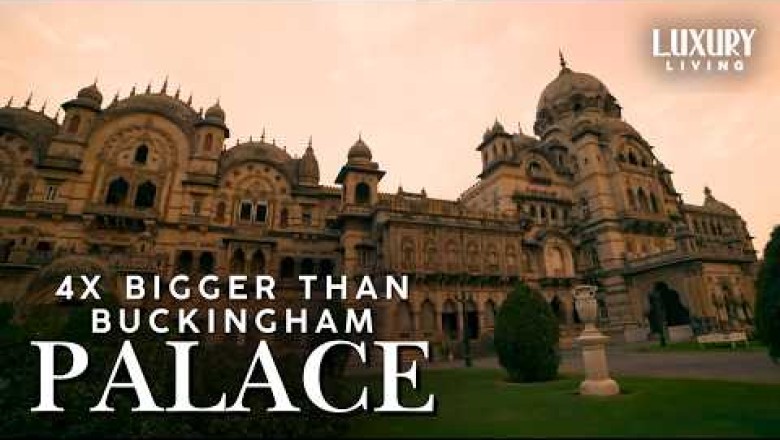

In Vadodara, Gujarat, Lukshmi Villas Palace offers an extraordinary glimpse into India’s royal past. Also known as Lakshmi Vilas or Laxmi Vilas Palace, this sprawling residence was completed in 1890 for Maharaja Sayajirao Gaekwad III, ruler of the princely state of Baroda. Often described as the world’s largest private residence, it remains home to descendants of the Gaekwad dynasty.
Its size is impressive, but the palace’s greatest attraction is the artistry woven into its architecture. Designed initially by British architect Major Charles Mant and completed under Robert Fellowes Chisholm, the building is a striking example of Indo-Saracenic design. Hindu and Islamic architectural traditions meet European influences in a richly detailed combination of domes, arches, balconies and towers.
Inside, that exchange of cultures becomes even more elaborate. The magnificent Durbar Hall, where the Maharaja received guests and held formal audiences, features Venetian mosaic flooring, Belgian stained glass and intricate decorative work. Indian religious imagery appears in European-crafted glass and mosaics, bringing different artistic traditions together within the same room.
The palace was also built with an eye toward modern comfort. An elevator, electric bells and an internal telephone system reflected the technological ambition of the late nineteenth century. Cooling and air-conditioning improvements followed over time, adding practical comforts to a home whose appearance was unmistakably regal.
Art is another essential part of its story. The Gaekwads supported celebrated painter Raja Ravi Varma, whose work remains closely associated with the palace and its collections. The estate also includes the Maharaja Fateh Singh Museum, where visitors can explore paintings, sculptures and other treasures connected with the family’s artistic patronage.
Although the palace remains a private home, selected areas welcome tourists and local visitors. Public access allows people to appreciate its architecture and collections while the family continues to live in its residential quarters. The surrounding estate adds gardens, a golf course and other historic buildings to the experience.
The accompanying video offers a more personal perspective, taking viewers behind the scenes of this remarkable home. Beyond the chandeliers and ceremonial halls are the everyday rhythms of family life—a reminder that even a palace can hold familiar memories of children playing, shared conversations and quiet mornings.
That combination makes Lukshmi Villas Palace especially fascinating. Its grandeur tells the story of royal ambition, while its continuing life as a family home keeps that history warm, inhabited and connected to the present.