
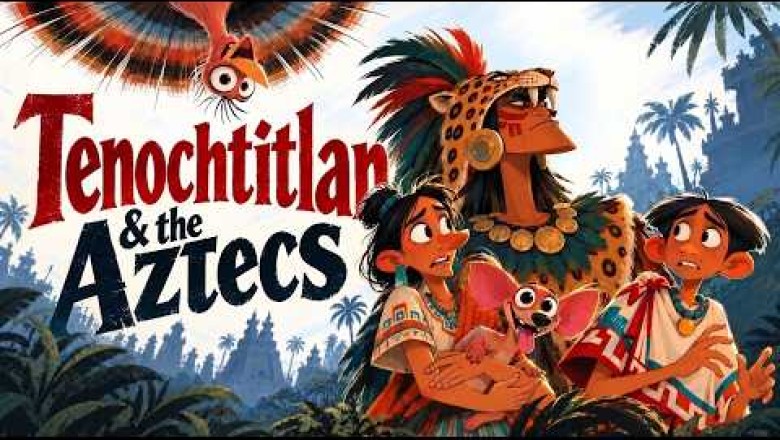

The rise of Tenochtitlan, capital of the Aztec Empire, and one of the largest cities on Earth in the fifteenth century. The story begins in the early 1300s, when the Mexica, a Nahuatl-speaking people of central Mexico, are pushed out of Culhuacan and settle on the swampy, salty islands of Lake Texcoco that no one else wanted. Plot by plot, using wooden stakes, reeds and mud, they build land out of shallow water, farm floating chinampa fields, and raise a city without iron tools, draft animals or wheeled transport.
From a tribute-paying vassal of Azcapotzalco, Tenochtitlan rises through the Triple Alliance with Texcoco and Tlacopan to become the centre of an empire. Tribute flows in, the Templo Mayor grows, causeways and dikes hold back the floods, and the city absorbs its rival Tlatelolco along with its enormous market, where cacao beans serve as currency, turkeys, dogs and lake algae are sold as food, and trade follows a five-day cycle tied to the Aztec calendar. Along the way: why horses vanished from the Americas, why maize, tomatoes, cacao and potatoes were unknown to the rest of the world, how obsidian replaced iron, and how Aztec writing combined pictures with sound signs.
The empire’s reach also builds deep resentment among its subject peoples. In 1519 Hernán Cortés lands on the Mexican coast, and in 1521 an Indigenous-Spanish coalition lays siege to the island capital. The lakes are drained over the following centuries, and on the same ground rises Mexico City, today the largest city in North America.