

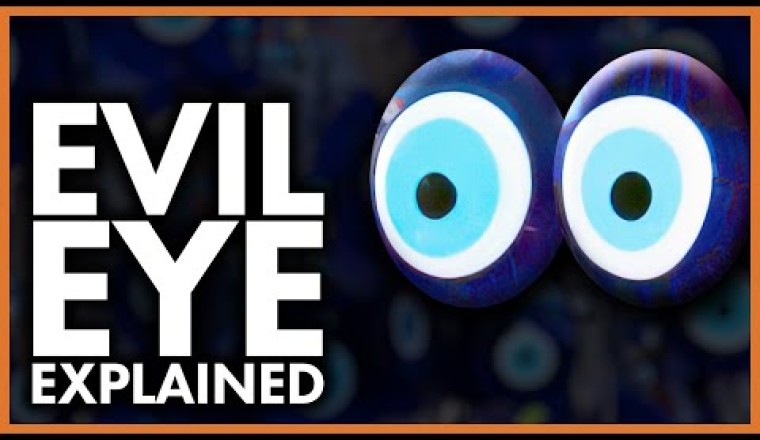

For thousands of years, across countless cultures, the evil eye has stared back from the pages of human history—a symbol of envy, protection, and the unseen forces that weave through daily life. Whether depicted as a piercing blue iris, a stylized talisman, or an unspoken warning, this ancient concept has endured, shape-shifting with each civilization that embraced it.
Ancient Origins
The earliest written references to the evil eye date back to around 3,000 BCE in Mesopotamia, though similar beliefs were recorded in Ancient Egypt, Greece, and Rome. At its core, the evil eye was thought to be a curse cast by a malevolent glare, often fueled by jealousy or ill will. This curse could bring misfortune, illness, or even death. The fear of the evil eye was so pervasive that it influenced social customs, from the way blessings were given to how compliments were delivered—lest admiration be mistaken for envy and inadvertently harm the receiver.
In Ancient Greece, the concept was known as baskania, and in Rome, it was malus oculus. The philosopher Plutarch even theorized that the eyes could emit invisible rays that carried destructive energy. Egyptians, on the other hand, wove protective “eye” symbols into their art and jewelry—most famously the Eye of Horus, which was believed to guard against evil and bring health and prosperity.
Cultural Spread and Symbolism
As trade routes expanded, the belief in the evil eye traveled alongside merchants, sailors, and pilgrims. In the Middle East, North Africa, and South Asia, protective amulets—often made of glass or gemstones—were worn or hung in homes. In Turkey, the nazar boncuğu, a striking blue-and-white bead resembling an eye, became the most recognized visual symbol of the belief.
In Jewish tradition, the concept appears as the ayin hara; in Islam, the al-‘ayn. In Latin American cultures, especially Mexico and Central America, mal de ojo is still a widely held belief, often centered on protecting children. Across the Indian subcontinent, various charms and rituals—from kohl-lined eyes to lemon-and-chili talismans—are used to deflect the malevolent gaze.
Protective Practices
Over centuries, societies developed rituals to counter the evil eye’s effects. These range from burning incense and reciting prayers to wearing amulets and beads. The logic behind these practices often combined spiritual belief with psychology—offering a sense of security against unseen threats and reinforcing cultural identity.
Some protective customs are surprisingly pragmatic: in certain Mediterranean villages, a person giving a compliment must quickly add a blessing to “neutralize” any unintended harm. In rural India, mothers may apply a small smudge of kajal (eyeliner) on a baby’s forehead to “ward off” envious eyes.
The Evil Eye Today
Far from fading into the annals of folklore, the evil eye remains a living, evolving symbol. In the modern era, it has crossed from spiritual belief into pop culture, fashion, and design. Celebrities wear evil eye jewelry, high-end brands incorporate the motif into accessories, and social media influencers use it as a digital talisman emoji 🧿.
Beyond aesthetics, the evil eye’s persistence reflects a deep, shared human concern—the idea that envy, whether intentional or not, has real-world consequences. In a world driven by visibility, likes, and public image, the evil eye metaphor feels freshly relevant. It’s a reminder to guard our energy, remain mindful of others’ emotions, and acknowledge that unseen forces—whether supernatural or psychological—still shape how we live.
Enduring Power
The evil eye’s longevity comes from its ability to adapt while retaining its core message: there is power in the gaze, and there is wisdom in protecting oneself from it. From ancient temples to modern jewelry counters, the symbol continues to offer reassurance against life’s invisible dangers, proving that some beliefs are simply too potent to fade.
How the Eye Is Represented in Different Cultures
| Region/Culture | Name/Term | Symbol/Appearance | Protective Practices |
|---|---|---|---|
| Ancient Greece | Baskania | Stylized eye motifs in pottery and jewelry | Amulets, charms, and spoken blessings to neutralize envy |
| Ancient Rome | Malus oculus | Painted or carved eyes on buildings and objects | Phallic charms, hand gestures (fig sign) to ward off evil |
| Egypt | Eye of Horus (Wedjat) | Falcon eye with stylized markings | Jewelry, tomb paintings, and amulets for health and protection |
| Turkey | Nazar boncuğu | Blue-and-white glass bead in the shape of an eye | Worn as jewelry, hung in homes, cars, and businesses |
| Middle East (Arab) | Al-‘ayn | Painted eye or amulet designs | Quranic verses, blessings, and hanging talismans in doorways |
| Jewish Tradition | Ayin hara | Eye motif, often combined with Hamsa hand | Reciting protective prayers, wearing combined eye-and-hand charms |
| India/Pakistan | Buri nazar | Kohl marks, chili-and-lemon strings | Applying kajal to children, hanging chili-lemon charms outside homes |
| Latin America | Mal de ojo | No specific symbol, focus on gaze itself | Red string bracelets, blessing rituals for children |
| Italy | Malocchio | Horn-shaped amulet (corno) or eye charm | Wearing corno pendants, making specific hand gestures (mano cornuta) |
| North Africa | Various local terms | Eye motif in ceramic, metal, and textiles | Burning incense, reciting protective phrases, hanging amulets in entryways |