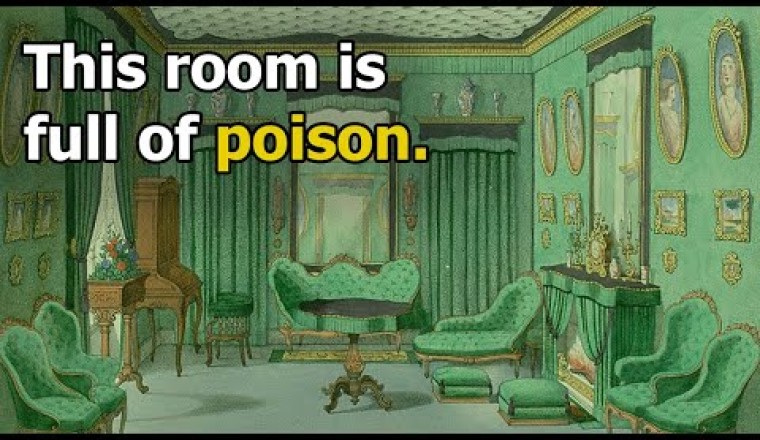

The Rise of Arsenic Green
But behind the beauty of those emerald green wallpapers, bright ball gowns, and children's toys lurked a deadly secret: arsenic. This toxic element found its way into everyday life during the 19th century, especially in paints and dyes, with tragic consequences.
One of the most infamous arsenic-based pigments was Scheele’s Green, discovered in 1775 by Swedish chemist Carl Wilhelm Scheele. It was a bright, brilliant green made from copper arsenite, and it quickly gained popularity for its eye-catching hue. By the 1800s, Scheele’s Green and its even more vibrant cousin, Paris Green (copper acetoarsenite), were widely used in wallpapers, artificial flowers, household paints, and especially textiles.
Victorian consumers were enchanted. Never before had such intense colors been so readily available. Green became a fashionable choice for clothing, especially evening gowns. Florists used arsenic-laced artificial greenery in arrangements, and interior decorators favored arsenic wallpaper for its rich tones and durability.
The Danger Becomes Apparent
Despite its aesthetic appeal, arsenic was deadly. It could cause vomiting, abdominal pain, convulsions, skin lesions, and, with enough exposure, death. But in the 19th century, the dangers were not fully understood or were willfully ignored. Arsenic in paint or wallpaper could flake or release poisonous dust into the air, especially in damp rooms, where mold metabolized the pigment and released arsenic gas. Likewise, people wearing arsenic-dyed garments could absorb the toxin through sweat or inhalation.
Victims included everyone from mill workers who dyed fabrics to children playing in green-painted nurseries. In one widely publicized case, a young girl died after prolonged exposure to arsenic wallpaper in her bedroom. Physicians and scientists began connecting unexplained illnesses to exposure to green decor and clothing, sparking concern but not immediate action.
The Arsenic Gown Scandal
The issue came to public attention in the 1860s, when reports circulated that women attending balls in green dresses were literally “dressed to kill”—not just others, but themselves. A 1861 article in Punch satirically described a fashionable woman whose “green gown” poisoned all who came near her. While some dismissed these stories as hysteria, the science was becoming undeniable.
Some retailers and manufacturers began advertising "arsenic-free" alternatives by the 1870s, and chemists developed safer synthetic dyes. But even then, arsenic remained in circulation for years, and full regulation lagged.
Legacy and Lessons
The story of Victorian arsenic paints and dyes is a cautionary tale about the cost of beauty and the slow progress of public health reform in the face of industrial and commercial interest. Today, examples of arsenic-green wallpaper and clothing are preserved in museums—with careful handling and protective gloves.
Modern pigments and dyes are far safer, but the history of arsenic reminds us that innovation can have unintended, and sometimes fatal, consequences. It's also a stark example of how fashion and consumer goods once carried hidden dangers, even as they dazzled the public with their brilliance.
Arsenic-Laced Victorian Wallpapers


1. Walter Crane’s “The Peacock Garden” (1889) – Saint Louis Art Museum
This wallpaper design by Walter Crane, titled The Peacock Garden, contains Scheele's Green, an arsenic-based pigment commonly used in Victorian wallpapers. The Saint Louis Art Museum holds a sample of this wallpaper, highlighting the era's use of toxic pigments for aesthetic appeal.
2. RISD Museum’s 1790 Fireplace Board Wallpaper
The Rhode Island School of Design Museum possesses a wallpaper sample from 1790, notable for its bright green bands. Testing revealed it had the second-highest level of arsenic among the museum's samples, indicating early use of Scheele’s Green in interior decor.
3. “Shadows from the Walls of Death” – Michigan History Center
This 1874 book contains samples of arsenic-laden wallpapers, assembled to warn the public about their dangers. The Michigan History Center houses this rare volume, serving as a testament to the hazardous materials once prevalent in homes.
Arsenic-Dyed Victorian Garments


1. Charlotte de Lorimier’s Wedding Dress (1859) – National Mississippi River Museum & Aquarium
Worn by Charlotte de Lorimier in 1859, this green dress is believed to be dyed with arsenic-based pigments. Due to its toxic composition, the museum takes special precautions in its handling and display.
2. Late 19th-Century Green Dress – Maryland Center for History and Culture
Dating from 1890–1893, this dress was donated by the estate of Miss Marion Fisher. Its rich green hue suggests the use of copper arsenite dyes, common in that period despite growing awareness of their toxicity.
3. Victorian Green Dresses – York Museums Trust
The York Museums Trust holds several Victorian dresses dyed with arsenic-based pigments. These garments, while visually stunning, are hazardous and require careful storage and handling due to their poisonous nature.
These examples underscore the Victorian era's pursuit of beauty, often at the expense of health and safety. The allure of vibrant colors led to widespread use of arsenic in everyday items, a practice that modern museums now approach with caution and reverence.