



In 1619, a small group of captive Africans arrived in English North America, marking the beginning of a painful and transformative chapter in American history. Among them were Antonio and Isabella, who would become the parents of William Tucker—the first documented African child born in the English colonies. Today, the Tucker family stands as living proof of endurance, tracing their lineage back to that first recorded African family in what would become the United States.


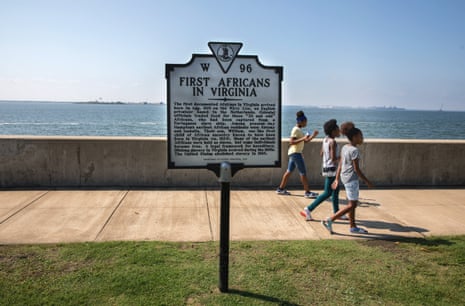
Antonio and Isabella arrived at Point Comfort, in present-day Hampton, Virginia, after being seized from a Portuguese slave ship. Though the early status of Africans in Virginia was complex and evolving, their son William Tucker’s 1624 birth marked a historic first in colonial records. His surname likely came from Captain William Tucker, a Virginia colonist—reflecting the harsh and often unjust systems forming at the time.
For generations, the Tucker descendants carried forward a legacy shaped by survival, faith, resilience, and reinvention. Their story reframes American history in a deeply personal way. It reminds us that Black history in America did not begin in abstraction—it began with families. With parents. With children. With names.
More than four centuries later, members of the Tucker family have participated in public commemorations of the 1619 arrival, including events in Hampton, Virginia, ensuring that their ancestors’ story is neither forgotten nor simplified. Their existence bridges past and present, connecting the earliest days of English America to today’s ongoing conversations about race, identity, and belonging.
The story of The Tuckers is not just about being “first.” It’s about continuity. About lineage. About a family whose roots run as deep as the nation itself.