


Among the treasures housed in the National Archaeological Museum of Naples, few works inspire as much awe as the Farnese Bull. Towering over visitors and packed with movement, emotion, and mythological drama, it is widely considered the largest single sculpture recovered from the ancient world. More than just a masterpiece of marble carving, it is a story frozen in stone—a scene of vengeance, suffering, and family loyalty that has captivated audiences for centuries.
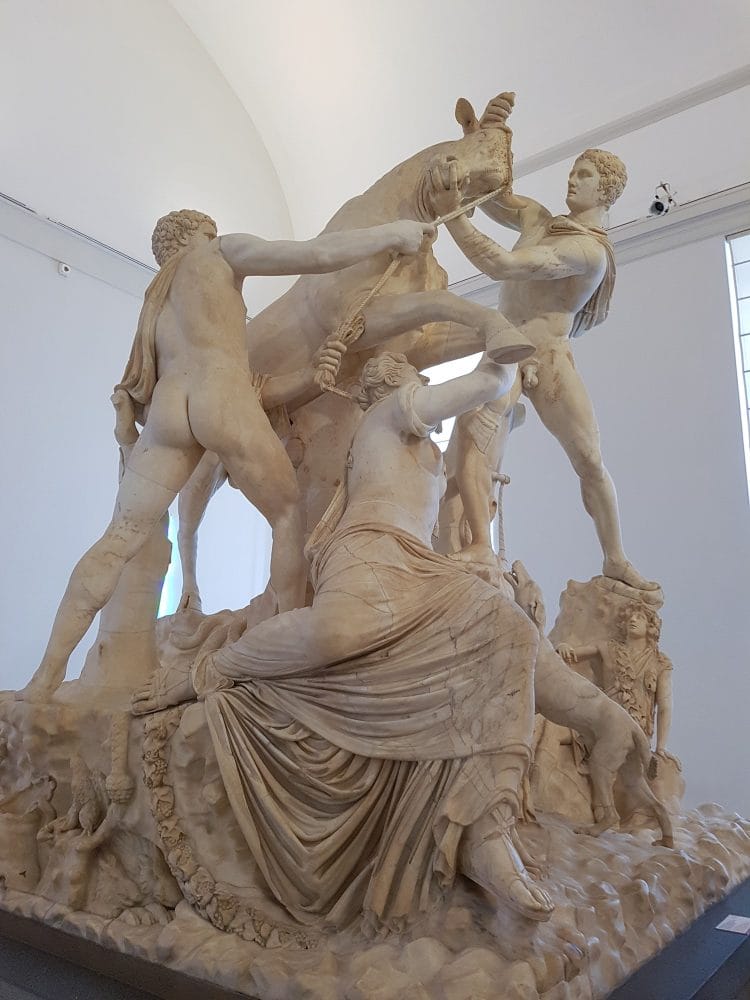
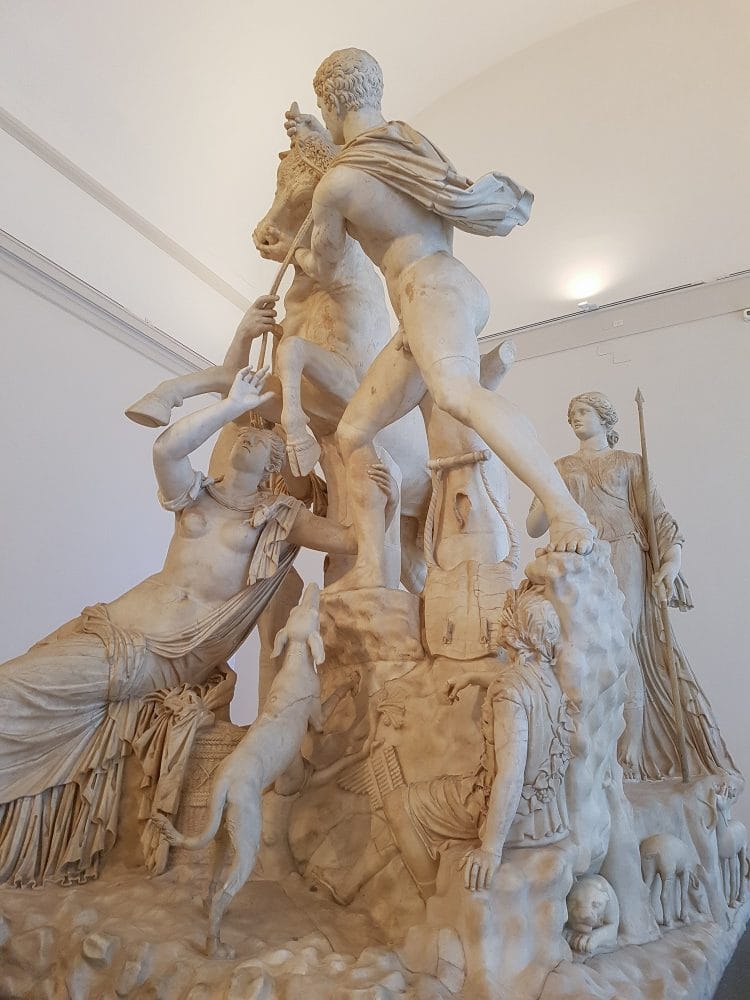
The sculpture depicts the punishment of Dirce, a figure from Greek mythology. According to the legend, Dirce cruelly mistreated Antiope, the mother of the twins Amphion and Zethus. When the brothers learned of their mother's suffering, they sought revenge by tying Dirce to a wild bull. The Farnese Bull captures the tense moment just before the punishment takes place. The massive animal strains against its handlers while the figures around it twist and struggle in a remarkable display of movement and emotion.
What makes the sculpture even more extraordinary is its scale. Carved from a single block of marble and standing nearly four meters high, the work weighs more than 20 tons. The sheer technical achievement required to create such a complex composition from one piece of stone is difficult to comprehend even today. Visitors often find themselves circling the sculpture repeatedly because every angle reveals new details, hidden figures, and dramatic expressions.
The Farnese Bull was discovered in 1546 during excavations at the ancient Baths of Caracalla in Rome. The dig was commissioned by Pope Paul III, a member of the powerful Farnese family, who hoped to uncover ancient treasures for the family's growing collection. The sculpture became one of the most celebrated pieces in the Farnese Collection, alongside the famous Farnese Hercules. Eventually, the collection was transferred to Naples, where it remains one of the highlights of the museum today.
Scholars continue to debate whether the Farnese Bull is an original Hellenistic masterpiece or a Roman copy of an earlier Greek work. Ancient writers attributed the composition to the sculptors Apollonius and Tauriscus of Tralles, who were active during the Hellenistic period. Regardless of its exact origins, the sculpture remains one of the most ambitious and influential works of classical art ever created.
Today, the Farnese Bull stands as a testament to the artistic brilliance of the ancient world. Its combination of colossal scale, technical mastery, and emotional storytelling continues to astonish visitors nearly two thousand years after it was carved. For many travelers, seeing this monumental work in Naples is every bit as unforgettable as visiting Pompeii or the ruins of Rome themselves.