

"Summertime, and the livin’ is easy..."
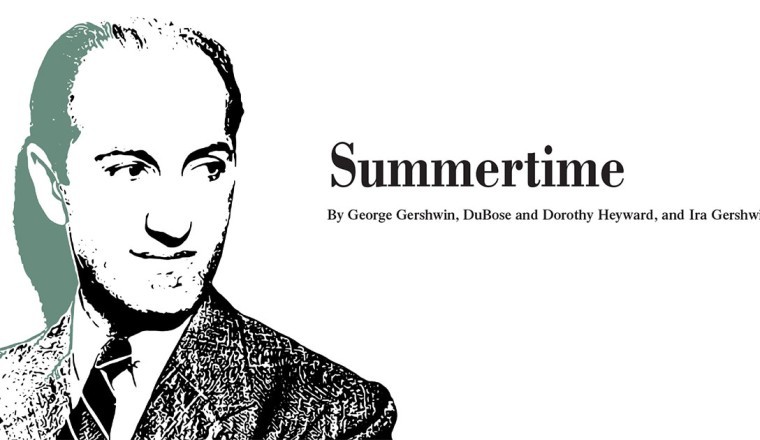
So begins one of the most hauntingly beautiful and frequently covered songs in the American musical canon. Born of opera, raised in jazz, and reborn across every genre from rock to reggae to R&B, “Summertime” is not just a standard—it’s a shape-shifting anthem of cultural endurance. Composed by George Gershwin, with lyrics by DuBose Heyward and additional lyrical refinement by Ira Gershwin, “Summertime” is arguably the most covered song in history, boasting over 25,000 recorded versions (and counting).
Let’s unpack how this lullaby became an immortal force in music history—and highlight the five most iconic renditions that redefined it again and again.
A Birth in Opera: The Genesis of “Summertime”
“Summertime” was written in 1934 for George Gershwin’s folk opera Porgy and Bess, which was based on DuBose Heyward’s novel Porgy. The opera tells the story of Black life in the fictional Catfish Row of Charleston, South Carolina. Though Gershwin was white, he sought to capture the musical essence of African American spirituals and lullabies, resulting in a song that feels both cradle-soft and culturally resonant.
Heyward penned the original lyrics, crafting a lullaby sung by the character Clara to her baby. Ira Gershwin, George’s brother and frequent lyricist, helped fine-tune the text. George Gershwin himself composed the music with a genius blend of jazz, classical, blues, and folk traditions, making the song a sort of musical prism—one that would refract differently depending on who held it up to the light.
The first performance was in 1935, with the legendary soprano Abbie Mitchell singing it in the original production. But that was just the beginning.
Why It Became the Most Covered Song Ever
What makes “Summertime” so endlessly reinterpretable? Here’s the secret sauce:
-
Its melody is both simple and profound. It lingers like a lazy July evening.
-
Its harmonic structure is inviting to improvisers, especially in jazz.
-
Its lyrics evoke a universal longing—a hope for peace, protection, and ease in the face of hardship.
-
Its cultural weight gives artists a chance to both honor and subvert tradition.
The song’s adaptability has turned it into a musical mirror, reflecting the identity, emotion, and political mood of whoever’s singing it.
The Top 5 Most Iconic Covers of “Summertime”
While thousands have sung it, a few renditions have carved themselves into the soul of popular culture. Here are five that changed the game:
1. Billie Holiday (1936)
Lady Day’s recording was one of the first major covers, just a year after the opera debuted. Her signature smoky phrasing and tragic undertones transformed “Summertime” into a jazz lament. With every breathy note, Billie made it her own—sorrowful, intimate, unforgettable.
2. Ella Fitzgerald & Louis Armstrong (1957)
This version is the audio equivalent of champagne on a summer porch. Fitzgerald’s silken vocals paired with Armstrong’s gravel-road charm created a duet that crackles with chemistry. Their take became a gold standard for jazz singers everywhere.
3. Janis Joplin / Big Brother & The Holding Company (1969)
Joplin didn’t just cover “Summertime”—she set it on fire. With her ragged edge and primal screams, she turned the lullaby into a full-on psychedelic storm. Her version captures the volatile spirit of the late '60s like no other.
4. Sam Cooke (1957)
Sam’s version is satin-smooth soul. His phrasing feels effortless, but the emotional depth is staggering. With gospel undertones and that trademark golden tone, Cooke made “Summertime” both spiritual and sexy.
5. Leontyne Price (1960s)
No list would be complete without the operatic powerhouse Leontyne Price. As one of the greatest sopranos of the 20th century—and one of the few Black women to rise to such prominence in opera—Price’s rendition returns the song to its classical roots with grace and grandeur.
A Legacy That Keeps Growing
From Miles Davis to Norah Jones, from Fantasia Barrino to Lana Del Rey—“Summertime” continues to inspire artists in every corner of the music world. It’s been covered in over 40 languages, adapted into dance remixes, sampled in hip-hop, and reimagined by orchestras and buskers alike.
Whether sung as a lullaby, a protest, a love song, or a jazz improvisation, “Summertime” remains a vessel—a way to express longing, resilience, and the eternal tension between hope and hardship.
So next time you hear those opening lines drifting through the air, stop and listen. You’re not just hearing a song. You’re hearing a century of artists singing through time, each one dreaming of a world where the livin’ is, at last, easy.
For something a little more recent; check out this rendition from Lana Del Rey just a few years ago.