
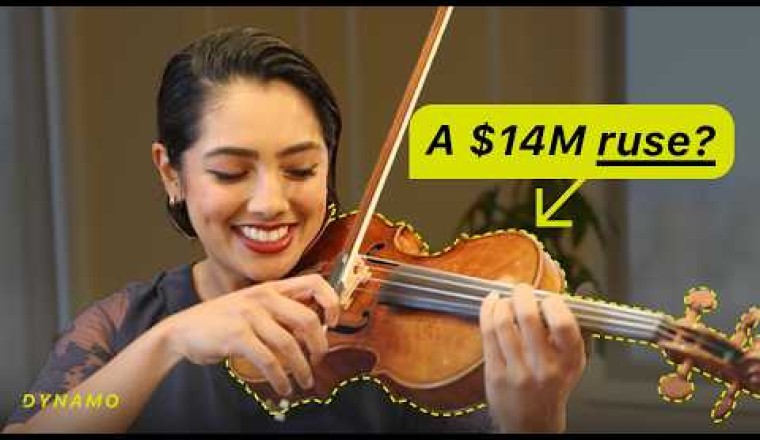

She embarks on a journey to explore more than just acoustic nuance—it’s a dive into how stories, history, and belief shape our emotional value of objects.
In the performance comparison, the raw recording of her everyday violin lands on the same stage as the golden-toned Strad. The tonal textures are each beautiful in their own right—yet the video smartly invites us to ask: did either violin inherently sound better, or did our expectations, the aura of prestige, and centuries of Strad lore tip the scales?
Between the measures, we get whispers of vaults, collectors, and the Spencers—echoes of provenance that transform this instrument from wood and strings into a vessel of myth. That’s the real take-away: the Stradivarius isn’t just a violin. It’s art, artifact, cult object—and the value we ascribe? It’s as much about belief as it is about sound. Nora teases out this paradox with sensitive self-interrogation, hinting that at some point, the lines blur: you're not just hearing music, you're hearing legacy.
Ultimately, the test is more philosophical than scientific—it doesn’t clinch a verdict on whether a Strad objectively outperforms a well-loved violin. Instead, it beautifully lays bare how we humans invest far more than dollars in something steeped in story and mystique. It’s a lyrical reflection on taste, trust, and tradition—one that leaves you humming not just with melody, but with thought.