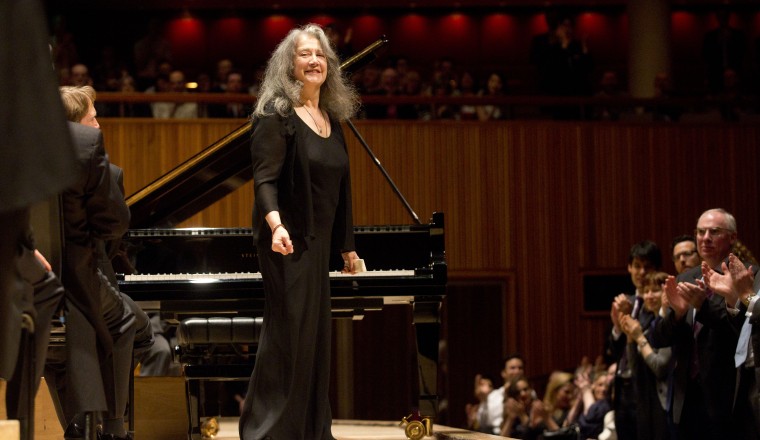

Martha Argerich is not just a pianist—she's a tempest in a concert hall, a sorceress of sound, a living myth whose name sends shivers down the spines of music lovers and musicians alike. Born in Buenos Aires in 1941, Argerich emerged like a bolt of lightning from the Southern Hemisphere, dazzling the classical world with a combination of technical brilliance, interpretive daring, and raw, untamed energy that defies categorization.
Her rise to international fame was meteoric. At just 16, she won both the Geneva International Music Competition and the Ferruccio Busoni Competition within weeks of each other. But it was her legendary first prize win at the 1965 International Chopin Competition in Warsaw that sealed her place in the pantheon. Audiences didn’t just listen—they gasped, held their breath, and fell in love.
Argerich is famously reclusive, allergic to the spotlight and highly selective about solo performances. For decades, she has focused primarily on chamber music and concertos, preferring the camaraderie of collaboration over the isolating heights of solo stardom. This doesn’t diminish her legend—it deepens it. She plays not to dominate the stage, but to conjure something bigger than herself.
Her interpretations are electric—whether it’s the fierce athleticism of Prokofiev and Ravel or the lyrical complexity of Schumann and Chopin. Argerich doesn’t just perform the notes; she hurls herself into them, her playing unpredictable yet utterly convincing, spontaneous yet deeply informed. There’s a wildness to her phrasing, a cinematic sense of danger and delight, as if the piano itself might burst into flames.
She is also a mentor, a muse, and a mover of mountains in the classical music world. Through festivals like Lugano and her support for young talent, she has shaped generations of pianists with her fierce intelligence and boundless generosity.
Martha Argerich is proof that genius doesn’t have to play by the rules. She doesn’t give interviews easily, rarely plays the same program twice, and often cancels concerts if she feels the stars aren’t aligned. But when she does play, something almost mystical happens. You don’t just hear Martha Argerich—you witness her. And if you’re lucky, you never forget it.
Martha Argerich at the 2016 Kennedy Center Honors
Norman Krieger on a Martha Argerich Trick (Praying Mantis)
10 Minute Compilation