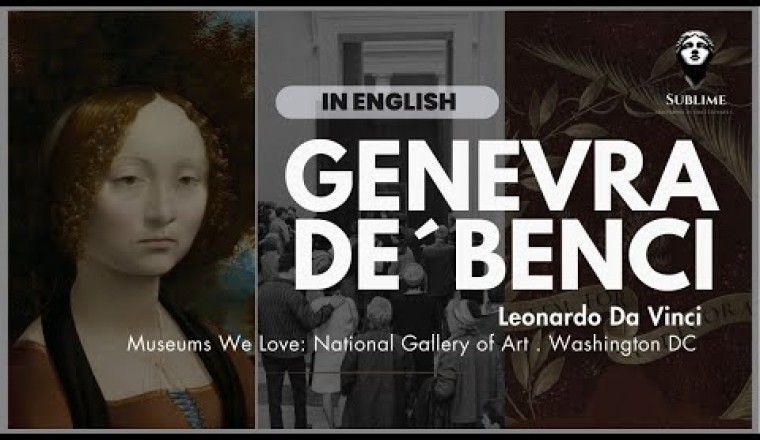

A Young Noblewoman of Florence
Ginevra de’ Benci was a member of a prominent Florentine banking family and was likely around 16 or 17 years old when the portrait was painted, possibly to commemorate her marriage to Luigi Niccolini. Unlike the later, more famously enigmatic Mona Lisa, Ginevra’s portrait exudes a reserved, introspective dignity.
Leonardo presents her in a three-quarter pose, a relatively new approach at the time that helped revolutionize portraiture. Her gaze is direct and serious, a notable departure from the more idealized or stylized depictions of women common in earlier Italian art.
Innovation and Symbolism
The background of Ginevra de’ Benci reveals Leonardo’s early interest in naturalism. A dense juniper bush—ginepro in Italian, a pun on Ginevra’s name—dominates the backdrop. The juniper symbolized female virtue and chastity in Renaissance iconography, aligning with contemporary ideals of femininity.
The painting is also technically innovative. Leonardo employed oil paints, still a relatively new medium in Italy at the time, which allowed for his characteristic soft modeling of light and shadow—sfumato—to emerge. This subtle technique adds depth and lifelike quality to Ginevra’s features.
A Mysterious Loss
The painting we see today is incomplete. The lower portion, including Ginevra’s hands, was likely cut off sometime in the past—possibly due to damage or framing preferences. Infrared analysis has revealed that Leonardo had indeed painted her hands resting delicately, a motif he would return to in later works.
On the reverse side of the panel, an intricate emblem shows a sprig of juniper encircled by a wreath of laurel and palm, with the Latin motto "Virtutem Forma Decorat", meaning “Beauty adorns virtue.” This reverse painting is believed to be by another artist, but it reinforces the central themes of the portrait.
Legacy
Though overshadowed in fame by the Mona Lisa, Ginevra de’ Benci offers a vital glimpse into Leonardo’s early development as a portraitist and his humanist philosophy. The psychological depth, technical mastery, and symbolic richness of the work mark it as a turning point in Renaissance portraiture and the beginning of Leonardo’s lifelong fascination with the human form and spirit.