

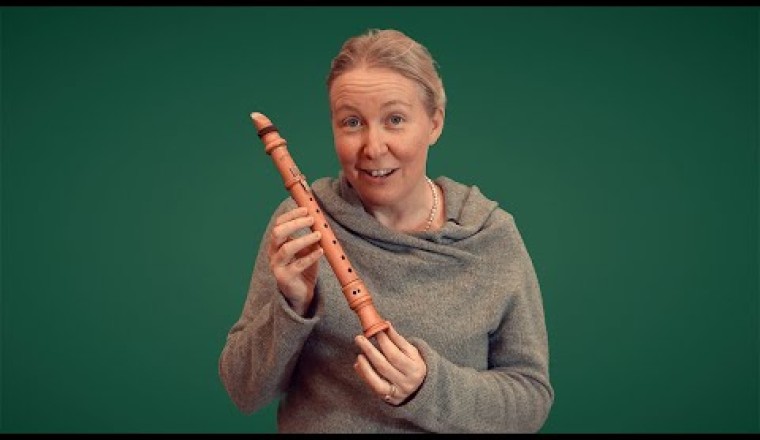

The chalumeau has a single reed and a cylindrical bore, much like a recorder, and produces a rich, reedy sound. It was primarily crafted from wood and had a limited range, generally spanning about one octave and a fifth.
In the early chalumeau, tone holes controlled pitch, but without any key mechanism to extend its range significantly. Johann Christoph Denner, a German instrument maker, is credited with refining the chalumeau in the late 1600s or early 1700s. His improvements included adding a register key, which allowed the instrument to play a wider range of notes by jumping to the second octave. This modification effectively transformed the chalumeau into a more versatile instrument, eventually evolving into what we now recognize as the clarinet.
While the chalumeau gradually fell out of favor by the mid-18th century, its unique timbre and historical significance have kept it relevant in early music performances and baroque ensembles.
Timestamps
- 0:00 Intro, 'Irish Tune' by Sam Haywood
- 0:48 History
- 2:23 Composers who wrote for the chalumeau
- 3:06 First Suite, La Speranza by Graupner
- 4:53 The most interesting thing about the chalumeau
- 5:31 The development of the instrument
- 6:49 First Suite, Gavotte by Graupner