

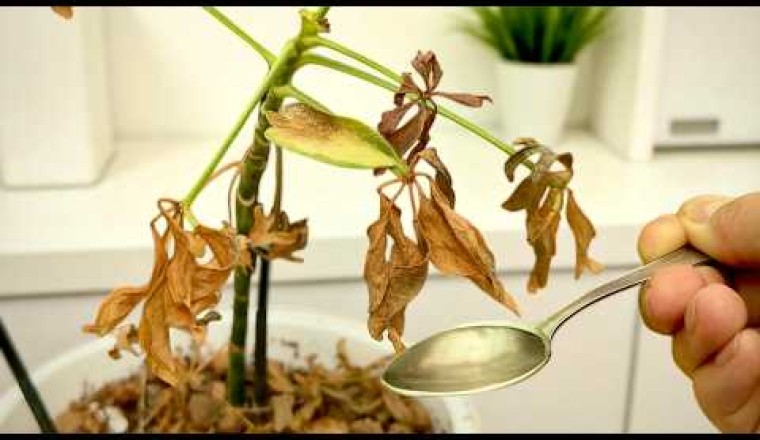

Even the saddest, dying plants can come back to life—if you know the right trick! In this step-by-step guide, you'll see how a struggling schefflera (umbrella plant) was revived using a simple hydrogen peroxide solution and a few easy plant care secrets. Whether your houseplant has yellow leaves, root rot, or just looks hopeless, don’t give up—this method works for almost any plant!
What you’ll learn in this video:
- How to clean and prepare weak roots for a fresh start
- The exact hydrogen peroxide mix to boost root recovery
- How to repot a plant for maximum growth
- Tips for watering and lighting to avoid future problems
- Why even overwatered or dried-out plants can get a second chance
This plant rescue method is perfect for beginners and experienced gardeners alike. If you’ve ever wondered how to revive a dying plant, save a root-rotted houseplant, or bring back those sad leaves, you’re in the right place!
In this video she uses a Hydrogen Peroxide solution of 1 teaspoon to 1 litre to 33oz.
General Method
To revive plants with hydrogen peroxide, dilute it to a 3% solution (common drugstore variety) with water, typically using a ratio of 1 part hydrogen peroxide to 4 parts water for a general solution or 1 part hydrogen peroxide to 2 parts water for a more potent solution. This diluted solution can be used to treat root rot, oxygenate soil, and potentially help with pest control.
If you're using this method on plants in your vegetable garden you will need food grade hydrogen peroxide.
Here's a more detailed breakdown:
For treating root rot (a common reason to use hydrogen peroxide on plants):
- Dilute: Mix 1 part 3% hydrogen peroxide with 2 parts water.
- Apply: Gently remove the plant from its pot, remove as much soil as possible from the roots, and soak the root ball in the diluted solution for 5–10 minutes.
- Rinse: Rinse the root ball thoroughly with plain water.
- Repot: Repot the plant in fresh, damp soil, and allow it to dry out before watering again.
For general use (watering and soil treatment):
- Dilute: Mix 1 part 3% hydrogen peroxide with 4 parts water.
- Apply: Water the plant with this solution, or use it to drench the soil around the plant.
- Frequency: This can be done periodically, such as once a month, to help oxygenate the soil and potentially deter pests.
For treating fungus gnats:
- Dilute: Mix 1 part 3% hydrogen peroxide with 4 parts water.
- Apply: Spray the solution on the soil surface where the gnats are present, or use it to drench the soil.
Important Notes:
- Always use a 3% hydrogen peroxide solution, which is readily available at most drugstores and supermarkets.
- Avoid using undiluted hydrogen peroxide, as it can damage plant roots.
- Be cautious when using hydrogen peroxide on plants with sensitive leaves, and always test a small area before applying it to the entire plant.
- Hydrogen peroxide breaks down into water and oxygen, so it's generally safe for plants when properly diluted.