

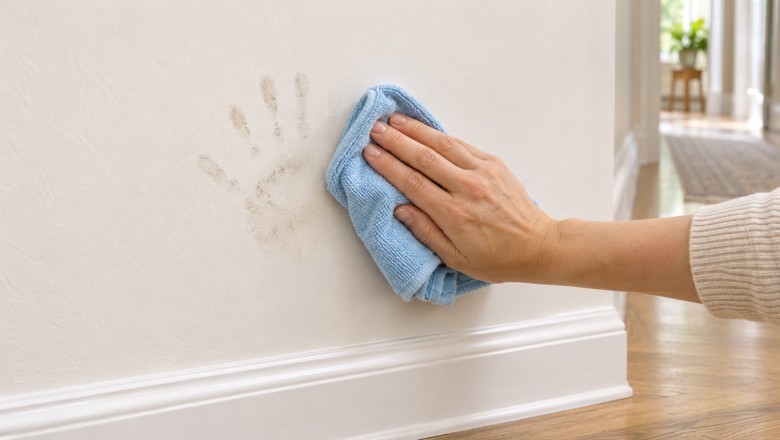

White walls have a way of keeping track of who’s been through the house. There’s a handprint by the light switch, a shoe scuff in the hallway, and a line of dust along the baseboards. A soft cloth and a little mild dish soap are usually enough to lift everyday grime. The trick is to use as little moisture and pressure as possible, especially on flat or matte paint.
Start With Warm Water and Mild Dish Soap
- Dust first. Use a dry microfiber cloth or a vacuum with a soft brush attachment to pick up loose dust. Pay special attention to the top edge of the baseboard, where dust collects and can turn into a gray smear when it gets wet.
- Mix a mild cleaning solution. Add a drop or two of mild dish soap to about 2 cups of warm water. Dip a soft microfiber cloth into the solution and wring it out well. A clean, soft sock slipped over your hand also works for wiping along trim.
- Test a hidden spot. Try the solution behind a door or low on the wall. Let the spot dry so you can see whether the color or sheen has changed.
- Wipe the mark gently. Start with a light pass over the handprint or stain. On flat or matte paint, gently dab the spot with the barely damp cloth. Satin and semi-gloss finishes generally tolerate gentle wiping better.
- Remove any soap residue and dry. Wipe the area with a second cloth lightly dampened with plain water, then dry it with a clean towel. For baseboards, keep water from pooling along the floor or getting into seams and corners.
What to Do About Stubborn Scuff Marks
If a shoe scuff remains after washing, a damp melamine foam sponge may help on some painted surfaces. Test it in a hidden spot first, then try one or two passes with very light pressure. The foam is mildly abrasive and can leave a shiny or dull patch, even on white paint. Skip it on flat or matte finishes, which can show changes in sheen after rubbing.
A wall cleaner labeled for your paint finish is another option for stubborn grime. Follow the label and spot-test it first. If a mark still shows after the area dries, take a close look. A scratch or chip may need a small paint touch-up.
Give Baseboards a Quick Once-Over
For routine cleaning, run a dry microfiber cloth along the top ledge, then use your damp cloth to wipe the front and get into the grooves. Fold the cloth to a clean side as you go so you aren’t carrying dirt from one section to the next. A quick dusting during your regular floor cleaning makes the next wipe-down much easier.
The Recommended Routine
For ordinary dirt and handprints, you will want a straightforward method that lifts the skin oils and surface grime without requiring aggressive scrubbing.
- Dry Dust First: Run a clean microfiber cloth or a vacuum brush attachment over the area. This prevents rubbing loose surface dust into the paint.
- The Soap and Water Method (Safest for All Paints):
- Mix 1–2 drops of mild dish soap (like Blue Dawn) into a bowl or spray bottle of warm water.
- Dampen a microfiber cloth in the solution and wring it out completely so it is barely damp.
- Gently wipe the fingerprints using a circular motion.
- The Melamine Sponge Method (Fastest for Baseboards):
- Wet a melamine foam sponge (Magic Eraser) and squeeze out all excess water.
- Lightly glide it over the handprints on your baseboards and around light switches.
- Note: Use minimal pressure on walls, as harsh rubbing can leave a shiny spot or wear down the paint finish.
- Wipe Dry: Follow up immediately with a dry cloth to lift any loosened grime and prevent water streaks.
Products Mentioned
Dirty Baseboards? FIXED!
The Best Way to Wash Your Walls!