

🎙️ The First Recording: James "Iron Head" Baker (1933)
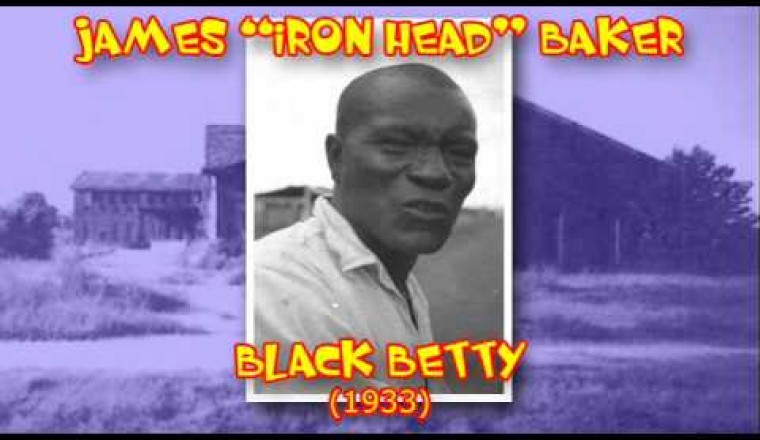
The earliest known recording of "Black Betty" was captured in December 1933 by the legendary father-son ethnomusicologist duo, John and Alan Lomax. They recorded it at the Central State Farm prison in Sugar Land, Texas, where James "Iron Head" Baker, a 63-year-old African American inmate, performed the song a cappella with fellow prisoners R.D. Allen and Will Crosby providing backing vocals. This raw, rhythmic rendition was part of the Lomaxes' mission to document African American folk music for the Library of Congress.
🖤 What—or Who—is "Black Betty"?
The term "Black Betty" has sparked much debate. Some interpretations suggest it referred to a bottle of whiskey, a whip, or even a prison transfer wagon. In the context of prison work songs, it's plausible that "Black Betty" symbolized the whip used by overseers, embodying both the physical and psychological burdens of incarceration.
🎶 From Field Recordings to Folk Legend
While Lead Belly is often associated with "Black Betty," he wasn't the first to record it. His 1939 version, recorded in New York for Musicraft Records, was part of a medley with "Looky Looky Yonder" and "Yellow Woman's Doorbells." This rendition introduced the song to a broader audience and cemented its place in American folk music history.
⚡ The Rock Revival: Ram Jam (1977)
Fast forward to 1977, when the rock band Ram Jam electrified "Black Betty" with a hard-hitting version that climbed the charts. Their adaptation, though musically distinct from Baker's original, retained the song's core lyrics and introduced it to a new generation. This version sparked both acclaim and controversy, with some critics questioning its cultural sensitivity.
🔄 The Legacy Lives On
"Black Betty" has been reimagined by numerous artists across genres, including Tom Jones, Nick Cave and the Bad Seeds, and Spiderbait. Each rendition adds a new layer to the song's complex history, reflecting its enduring resonance and adaptability.
From prison fields to concert halls, "Black Betty" stands as a testament to the power of music to transcend time and place, echoing the voices of those who first sang it under the Texas sun.
James "Iron Head" Baker (1933)
Ram Jam (1977)