

Tag: Runes

Why We Should Go Back to Writing in Runes
Before the Roman alphabet, English was written out using runes ᚠᚢᚦᚩᚱᚳ. And I think... they were better. Allow me to explain why as we explore how runes were used in the distant past, how they've been abused by groups like the Nazis, and how they could be...


Writing English in Runes
Runes aren't designed for writing Modern English, but many people want to try it anyway. In this video, an Old Norse expert looks at some of the challenges of doing that.
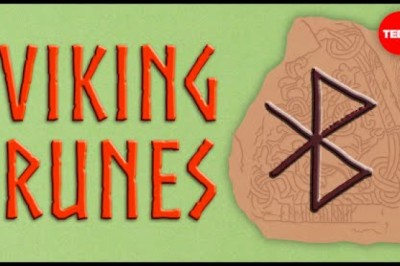
What Are Runes?
The Old Norse alphabet comprised of runes which was called the ‘futhark’. Futhark had several regional variations. It originally appeared in the 1st century CE. and continued to change over time.
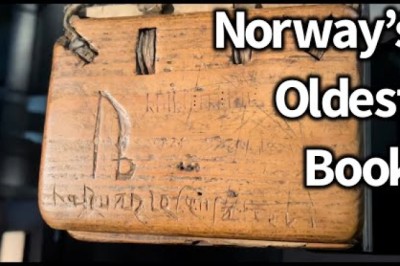
Norway's Oldest Book
The Kvikne Psaltery, held at Nasjonalbiblioteket (Oslo), features Latin contents but a wooden cover scratched on in Old Norse both in the Roman alphabet and in runes. Jackson Crawford, Ph.D.: Sharing real expertise in Norse language and myth with people h...

The Younger Futhark Runes
The Younger Futhark, also called Scandinavian runes, is a runic alphabet and a reduced form of the Elder Futhark, with only 16 characters, in use from about the 9th century, after a "transitional period" during the 7th and 8th centuries.

The Anglo-Saxons: A Brief History
Anglo-Saxon runes are an extended version of Elder Futhark consisting of between 26 and 33 letters. It is thought that they were used to write Old English / Anglo-Saxon and Old Frisian from about the 5th century AD.

The Names of the Runes (Elder Futhark)
The Elder Futhark, also known as the Older Futhark, Old Futhark, or Germanic Futhark, is the oldest form of the runic alphabets. It was a writing system used by Germanic peoples for Northwest Germanic dialects in the Migration Period.